

BuyHome.ge
+995 595 33 78 33


A Building Has a Generator: What Actually Works During an Outage
A Building Has a Generator: What Actually Works During an Outage
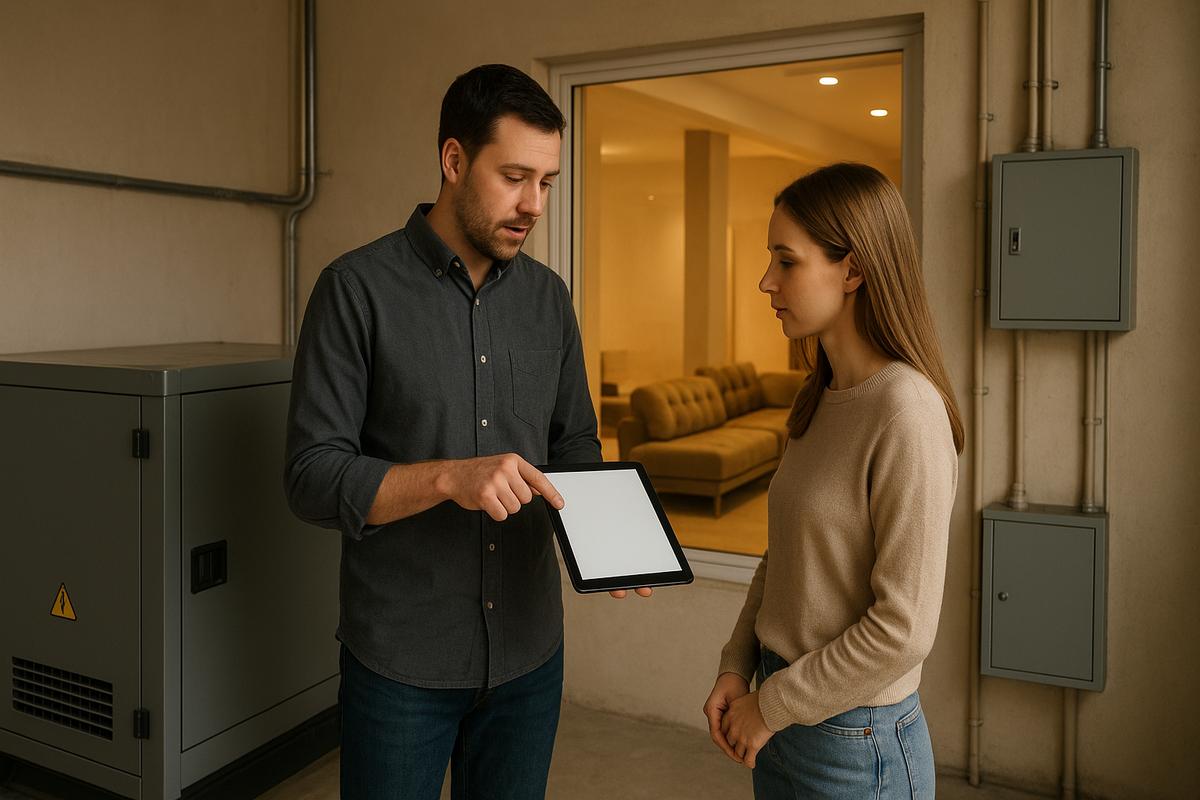
At a viewing, you hear: “The building has a generator, so outages are no problem.” But equipment on site does not establish whether the lift, water pumps, entry system or your refrigerator will work. Backup may serve selected common systems and involve an interruption while switching.
The buyer needs a confirmed list of backed-up systems, switching arrangements and maintenance responsibilities. “There is a generator” does not mean uninterrupted electricity inside the apartment. Assess the actual building, block and arrangement rather than a photograph of equipment.
🔎 Four separate backup questions
First: is the generator installed and commissioned for its intended operation? Second: which circuits are connected? Third: how does transfer occur during an outage? Fourth: who maintains readiness?
A positive answer to one does not settle the others. Equipment may exist without supporting the promised loads. A designed connection does not establish current working condition.
Ask management for a written explanation understandable to owners. A relevant specialist should assess the full technical documentation; the buyer needs verifiable conclusions for the intended scenario.
Common systems and apartment sockets are different
A generator may serve selected building circuits: lighting, particular pumps, access systems or lift equipment in a specified mode. This does not establish backup for every apartment circuit.
If in-apartment backup is promised, identify the actual points and permitted use. “Backup socket” is of little value without an identified arrangement and confirmation.
Ask separately about the refrigerator, internet, workspace, heating equipment and other important devices. A broad “will there be power?” may receive an answer referring only to corridor lighting.
📋 System confirmation table
This is a template, not a description of a real building. Until supported, each item remains “unconfirmed”.
| System | Backup: yes / no / unconfirmed | Evidence and limitations |
|---|---|---|
| Common-area lighting | Complete after checking | Areas covered and operating mode |
| Lift | Complete after checking | Which lift and which function |
| Water pumps | Complete after checking | Pumps covered and dependence on water supply |
| Intercom and access | Complete after checking | Opening, communication and failure procedure |
| Garage gate | Complete after checking | Power and intended access method |
| Fire-safety systems | Complete after checking | Confirmation from the responsible specialist |
| Apartment sockets | Complete after checking | Specific circuits, points and limits |
| Apartment internet | Complete after checking | Home and shared equipment dependencies |
Add the date, document and person responsible for the explanation. Mark verbal answers as such until confirmed.
Lift: define what “works” means
Lift backup may provide a particular function rather than normal operation of every cabin. Request an explanation of behaviour when mains power disappears and after transfer.
Establish which lift is covered, whether it may be used in the relevant situation and who issues instructions. Do not confuse an ordinary power outage with fire procedures.
Do not arrange an informal test or disconnect power during a viewing. The responsible maintenance party should test through the established procedure. Buyers need the results and understandable resident instructions.
Water, access and internet have other dependencies
A powered pump does not guarantee water if the external supply or another system component is unavailable. Establish exactly which problem backup addresses.
Intercoms, locks and gates may behave differently. Ask how people enter and leave during an outage, including backup failure. One working display does not establish overall safety.
Internet may depend on equipment beyond your own router. Even confirmed apartment power does not guarantee external connectivity.
⏱️ Transfer is not necessarily uninterrupted
Starting and transferring loads can involve a break. Automatic switching does not mean sensitive devices will never notice an outage.
Request the intended procedure, documented test results and limitations. Do not assume a universal start-up time across buildings: the actual arrangement matters.
If continuity is essential for work, discuss a separate solution with a qualified specialist. A generator and an uninterruptible power supply perform different functions. Do not independently connect private appliances to the building backup.
Capacity and load priority
The generator nameplate alone does not establish what residents can run simultaneously. Design, connected loads and priority arrangements matter.
Ask which loads are limited or disconnected under particular conditions and whether adding consumers is permitted. A large-looking generator does not authorise unapproved apartment connections.
A specialist should assess capacity and system compatibility. The buyer needs a functional answer rather than a personal calculation based on household appliance ratings.
🛠️ Maintenance, fuel and readiness
Identify the responsible organisation, service schedule, latest checks and fault-resolution process. For manual operation, establish who starts the system and how that person is available.
Where fuel is required, ask about replenishment, payment and the evidenced operating scenario. Any duration estimate needs conditions: load, available stock and technical readiness. “It lasts a long time” is not a planning basis.
Discuss equipment location, noise and safe operation too. These are questions for management and technical specialists, not an invitation to inspect running equipment without permission.
A hypothetical ordinary outage
Imagine a fictional building with written confirmation of corridor-lighting backup and a specified operating mode for one lift. Apartment sockets are not backed up.
Some common functions may therefore remain available under the documented procedure. The refrigerator, work computer and home router do not automatically receive backup. If external network equipment also loses power, powering your own router will not solve the entire connectivity problem.
The example describes no actual complex and does not prescribe one standard arrangement. Its purpose is to turn an advertising phrase into a practical household scenario.
Records and answers to request
Ask for the current backed-up load description, operating and maintenance arrangements, and available results of required checks.
Obtain resident instructions separately: whom to contact on failure, prohibited actions and access procedures. Confirm which block the answer covers and whether the arrangement has changed.
If the seller promises more than management confirms, record the discrepancy before purchase. A feature material to the decision needs appropriate supporting evidence rather than listing text alone.
Ownership costs of backup
Establish whether servicing, fuel and checks are included in regular charges or billed separately. Who funds major repair and replacement?
Separate planned charges from use-dependent costs. A low monthly fee says little about potential one-off owner contributions without examining the rules.
Do not automatically convert generator presence into a property-value premium. First assess its confirmed usefulness and ownership obligations.
✅ Pre-purchase checklist
- The backed-up systems are specifically identified.
- Common backup is distinguished from apartment supply.
- Lift operation has been explained by the maintenance party.
- Switching and possible interruptions are understood.
- Test information and maintenance responsibility are available.
- Operating duration is conditional rather than guaranteed.
- Access and failure procedures are clear.
- Regular and possible additional costs are understood.
Frequently asked questions
Will a generator keep my refrigerator running?
Only if the relevant supply is included and confirmed. Building backup does not automatically provide this.
Does automatic starting eliminate interruption?
Do not assume every automatic system is uninterrupted. Check the actual transfer arrangement.
Can I connect my apartment myself?
Changes to common systems require appropriate professional assessment and agreement. Do not use improvised connections.
Is a video of the generator running enough?
It does not establish connected circuits, current readiness or apartment functions. Obtain a confirmed functionality list.
Use the feature meaningfully in your search
Define what matters during an outage: access, reaching your floor, water or continuity for specific equipment. Compare those needs with confirmed building functions.
Technical information checked on 31 October 2026; a specific installation requires assessment by a relevant specialist.
Explore the BuyHome catalogue. If backup power is essential, tell us early so it becomes part of the property comparison.
Date added: 09.11.26
Related articles





Related categories

How to choose a complex
How to choose a residential complex in Georgia — key criteria affecting comfort, liquidity, and investment returns, with common mistakes explained.

How to complete a deal
How to complete a real estate purchase in Georgia — step-by-step breakdown of the process, documents, timelines, and common buyer mistakes.

Bank account opening
How to open a bank account in Georgia — requirements for foreigners, required documents, timelines, and key banking specifics.

Utilities guide
Utility bills in Georgia — overview of electricity, water, gas, internet, and building maintenance costs, with payment methods and expense calculations.
Benefits of buying property on BuyHome.ge

Best property prices
No commission for buyers
Up-to-Date Properties on the Website
Free property selection
Free transaction support
Free expert consultations

Submit a Request
for a Consultation!

2026 © All rights reserved