

BuyHome.ge
+995 595 33 78 33


A New-Build Area Changes After Measurement: Checking the Price Adjustment
A New-Build Area Changes After Measurement: Checking the Price Adjustment
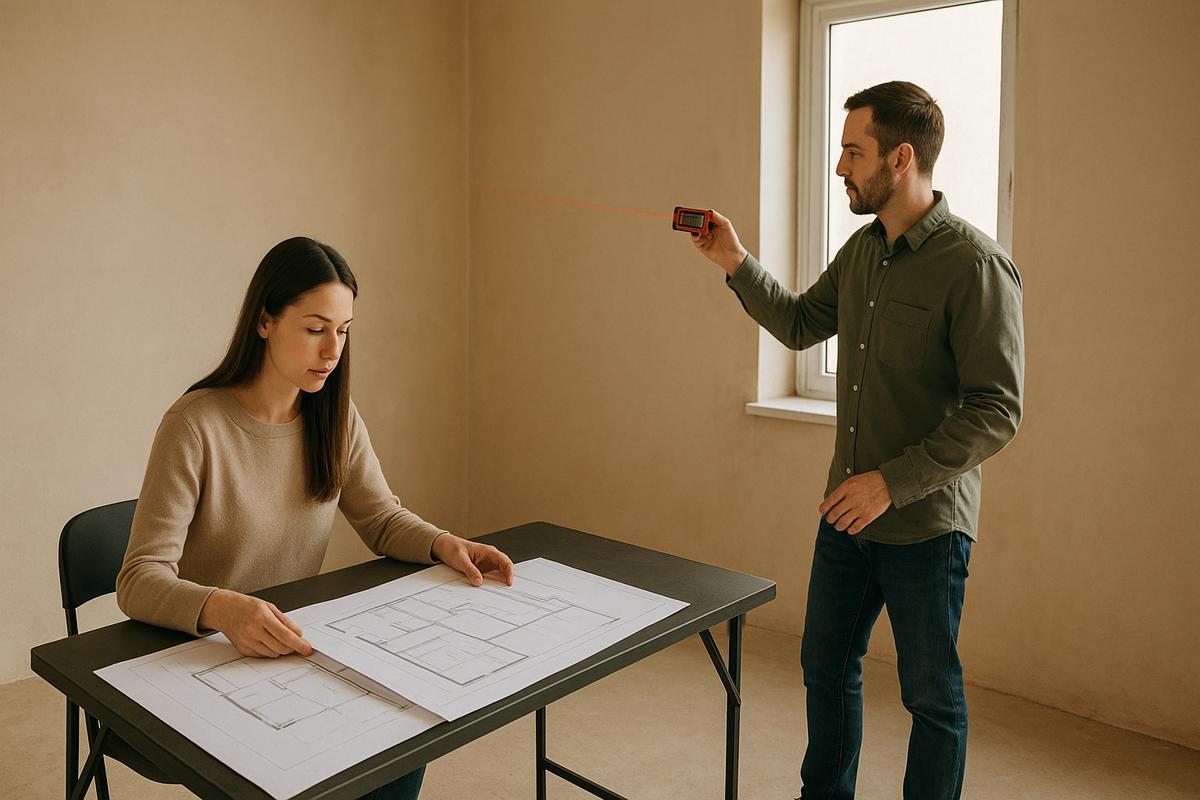
The developer says the apartment is larger following final measurement and requests an additional payment. The message gives a new area and total, but does not clearly identify the contract provision or what was measured. Before paying, reconstruct the entire calculation.
An area change alone does not establish the additional payment or refund. Check four elements together: the area definition, measurement record, contractual price-adjustment mechanism and arithmetic. Do not assume a universal tolerance percentage applies to every Georgian new-build purchase.
🔎 Start with the signed revision
Locate the main contract, area and plan appendices, payment schedule and amendments. Use the current signed package rather than a listing or initial offer.
Mark provisions on final measurement, specification changes, price, notices and disputes. The mechanism may extend across several sections through cross-references.
For a bilingual contract, compare these clauses in both languages. Differences such as “above”, “within” or “the entire difference” can change the calculation without changing the input figures.
Establish which area is being compared
Check the original definition: which parts are included and how balconies, terraces and other elements are treated. Do not substitute your personal concept of usable space for the contractual measure.
Then establish whether the final figure uses the same basis. Comparing different indicators can create an apparent increase caused only by a change in presentation.
Request an explanation of partitions and other elements where relevant. A qualified specialist should assess measurement method and technical accuracy; the buyer should not have to resolve this from a messenger screenshot.
📋 Documents supporting the demand
| Record | Purpose |
|---|---|
| Current contract and amendments | Establish adjustment basis |
| Original agreed plan | Identify the original property and measure |
| Final plan or measurement report | Establish the new area and date |
| Method and area-composition explanation | Compare equivalent quantities |
| Detailed monetary calculation | Check rate, difference and adjustments |
| Notice and payment-deadline basis | Understand how the demand was made |
| Registration information where relevant | Compare records for the same property |
Identify the surveyor and apartment. Block, floor and unit references should connect the records to your purchase.
Read tolerance provisions carefully
A particular contract may contain a threshold, special adjustment method or fixed price. Do not assume every additional square metre is charged at the original rate.
If a threshold exists, establish what it affects: entitlement to request an adjustment, the portion charged or other rights. What happens if the area decreases? Are increases and decreases treated equivalently?
Check absolute and percentage figures, rounding and the percentage base. Do not import a “normal tolerance” absent from the text. Discuss ambiguity with a lawyer rather than independently selecting a preferred interpretation.
🧮 Hypothetical increase calculation
Assume an original area of 50.00 m², an illustrative rate of 1,200 currency units per m² and an initial total price of 60,000. For this example only, the verified contract expressly requires linear adjustment of the full difference in either direction at that rate, with no threshold or other charges.
Final measurement gives 51.20 m²:
- Difference: 51.20 − 50.00 = 1.20 m².
- Illustrative additional payment: 1.20 × 1,200 = 1,440.
- Revised total: 60,000 + 1,440 = 61,440.
This result applies only to the assumptions stated. Do not transfer the formula to a contract with different price or difference provisions. These figures establish neither a market price nor a legal rule.
Hypothetical decrease calculation
Using the same model, suppose the final area is 48.80 m²:
- Difference: 48.80 − 50.00 = −1.20 m².
- Price change: −1.20 × 1,200 = −1,440.
- Revised total: 60,000 − 1,440 = 58,560.
If the full 60,000 has already been paid, the model produces a refund of 1,440. If only 55,000 has been paid, the remaining balance is 58,560 − 55,000 = 3,560; there is no separate refund of paid funds in that scenario.
Actual refund or set-off procedures and timing depend on the contract and applicable law. Arithmetic alone does not document a contractual change or settle the payment process.
Separate the revised price from the balance due
A demand may combine an area adjustment, an unpaid instalment, a separate service and an earlier agreed correction. Separate those components.
Request a reconciliation showing the original price, measurement adjustment, other changes, revised price, payments received and final balance. Verify each payment against evidence.
Otherwise, the buyer may mistake the entire balance for an area surcharge or count an earlier payment twice. Where currencies differ, separately check the contractual conversion mechanism, dates and rounding.
Can you commission an independent check?
If the figure is doubtful, discuss a repeat measurement with a relevant specialist. Define the objective: checking geometry, methodology or a specific discrepancy.
Establish access, finishing stage and comparison documents. Different methods or construction stages can produce another non-comparable figure if not explained.
Ask a lawyer about recognition of the result, expenses and the dispute procedure. A personal tape measurement may identify a question, but does not automatically invalidate the developer’s record.
📝 A clarification request
A practical starting text is:
“I received the area-change notice for apartment [identification]. Please provide the final plan and measurement record, the area definition used, the relevant provision of the current contract and a detailed price-adjustment calculation. Please separately show payments already credited, the remaining balance and the basis and deadline for payment or refund. Please also explain the verification procedure if the records differ.”
This is a request template, not a legal claim suitable for every case. Insert verified information and retain evidence of delivery.
Deadlines and related steps
Establish whether agreeing the revised area affects signatures, handover, registration or financing. For a mortgaged purchase, discuss changed figures and property characteristics with the bank before accepting a new commitment.
Do not assume a clarification request automatically extends payment deadlines. If a deadline is close, separately discuss treatment of the disputed part with a lawyer and the other party.
Document the outcome appropriately. A corrected invoice, contract amendment and revised plan serve different purposes; one does not necessarily replace another.
Checklist before accepting the calculation
- All documents identify the same apartment.
- Original and final areas use comparable definitions.
- Surveyor, date and methodology are identified.
- The exact monetary-adjustment clause has been located.
- Threshold and rate have not been borrowed from another contract.
- Increase or decrease has been independently recalculated.
- Previous payments are credited once.
- Notice, deadline and dispute process are understood.
- Any necessary bank confirmation has been obtained.
Frequently asked questions
Does every increase require an additional payment?
Examine the particular contract and applicable rules. A new area figure alone does not establish the full payment mechanism.
Is a decrease always refunded in cash?
Not necessarily. Contract terms, payment stage and applicable rules matter. Set-off and refund are different possibilities.
Can I compare the listing area?
Keep the listing as evidence, but assess the monetary mechanism against transaction documents and established property characteristics.
Who pays for another measurement?
That depends on agreements and circumstances. Do not assume automatic reimbursement without checking its basis.
The practical outcome
Obtain a coherent package: supported area, adjustment basis, checked arithmetic and an appropriately documented final settlement process. This focuses the discussion on the actual amount.
Legal and technical information checked on 31 October 2026; a specific demand requires document review.
Explore new developments through BuyHome. Ask about final measurement provisions before signing the purchase agreement.
Date added: 08.11.26
Related articles






Related categories

Taxes and fees (purchase and rental)
Guide to taxes and costs for buying and renting property in Georgia: registration and related fees, rental income tax, exemptions, payment deadlines, and practical calculation examples.

Real estate legislation in Georgia
Key rules of Georgian real estate law: ownership rights, public registry registration, purchase and rental transactions, key restrictions, and practical guidance for residents and foreigners.

Developer contracts
A practical guide to developer contracts in Georgia: instalment plans and payment schedules, completion timelines, warranties, penalties, and termination terms. What to review before signing and how to reduce buyer risks.

Transaction risks and security
Seller and property due diligence in Georgia: registries, documents, encumbrances, and key risks. What to verify before the deal to protect yourself and buy with confidence.
Benefits of buying property on BuyHome.ge

Best property prices
No commission for buyers
Up-to-Date Properties on the Website
Free property selection
Free transaction support
Free expert consultations

Submit a Request
for a Consultation!

2026 © All rights reserved