

BuyHome.ge
+995 595 33 78 33


A Room Without Its Own Window: What to Ask Before Buying
A Room Without Its Own Window: What to Ask Before Buying
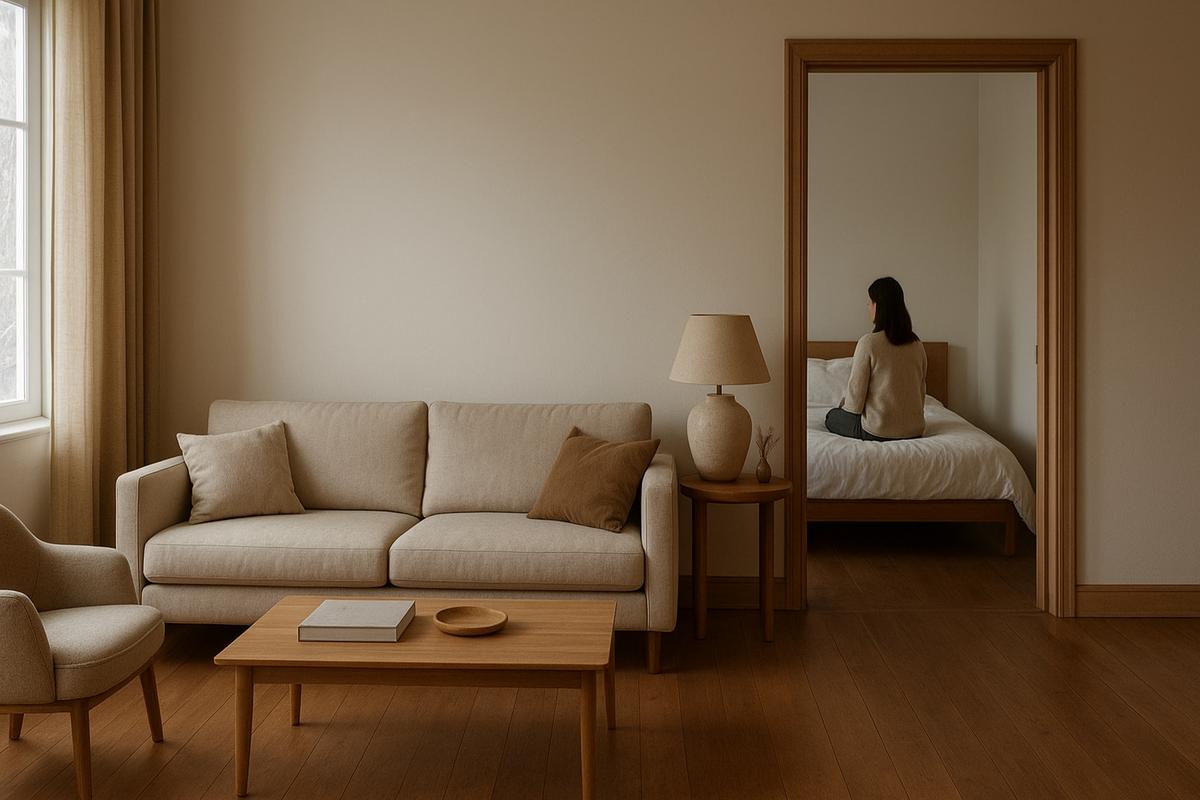
A listing promises two bedrooms, yet the plan shows only two external windows: one in the living room and one in another room. The second “bedroom” appeared when a partition was added inside the apartment. A bed fits, the door closes and the photographs look inviting. None of that answers the central question: how many independently usable rooms are you actually buying?
Assess a windowless room through its actual layout, documentation, daylight, ventilation and intended use. The label in a listing does not establish bedroom status or compliance. Separate confirmed features from marketing before comparing prices.
🔎 Begin with a window plan
Request a plan showing external walls and every window, then compare it with the apartment. Mark each room, its daylight route and what changes when the door closes.
Establish whether the room has its own external window or only glazing towards the living room. Light through a glazed partition, internal opening or doorway is a different characteristic from a dedicated external window.
Examine the neighbouring room too. Has the partition reduced its light or usefulness? A new room label should not conceal that another space has become a passage or lost a practical seating area.
Three descriptions of the same apartment
Separate these layers:
- Marketing: what the seller calls the space.
- Physical arrangement: the actual walls, doors, windows and building services.
- Documentation: what relevant property records show and how alterations were documented.
The layers may differ. Phrases such as “European layout” or “extra bedroom” do not establish approval of a partition or suitability for every use.
Ask the seller to explain discrepancies and provide supporting records. The legal position of the layout and requirements for the particular room need property-specific professional assessment, not interpretation of advertising language.
📋 Room assessment table
| Question | Evidence or observation |
|---|---|
| Does it have its own window? | Actual external opening and location |
| How does daylight enter? | Light route with doors and curtains in normal positions |
| How does air enter and leave? | Designed arrangement and specialist verification |
| What changes with the door closed? | Light, enclosure and operation of the intended system |
| When was the partition added? | Earlier and current records and required confirmations |
| What use is being assessed? | A specific scenario and applicable requirements |
| What changes would be needed? | Feasibility, approvals and cost |
The table is not a self-issued compliance certificate. It helps identify questions and commission a targeted inspection.
Daylight: examine its route, not the photograph
Where possible, visit during daylight with artificial lights switched off. Ask to see the normal positions of internal doors, curtains and furniture.
Light finishes and wide-angle photography can make a space appear more open. Assess the actual desk, wardrobe or bed position rather than only the view from the doorway.
Internal glazing may transmit light while reducing privacy. If privacy means keeping an opaque curtain closed, assess the room in that condition as well. A backlit decorative “window” is not an external opening.
Ventilation: an air conditioner does not settle it
Establish how fresh air is intended to enter and air to leave this particular room. An ordinary air conditioner that recirculates room air should not automatically be treated as fresh-air ventilation.
A grille on the wall is not proof of a functioning system either. Ask what it connects to, whether an incoming-air path exists and how performance was checked.
Do not judge only from a brief viewing with every door open. The proposed use needs assessment with the door closed and the apartment operating normally. A relevant specialist should check system design and performance; a generic household rule cannot replace a property inspection.
Compare the layout with relevant records
Identify which plans relate to the cadastral property and how well they represent its current state. A coloured marketing sketch is not equivalent to documentation of an approved layout.
Ask when the partition was installed, whether services changed and what confirmations were required. Approval requirements depend on the work and property.
Avoid the opposite assumption too: the absence of a detailed room drawing in one document does not itself establish a violation. A lawyer and technical specialist should determine the records needed for the particular assessment.
🛏️ A bed does not establish bedroom status
Furniture demonstrates an arrangement, not permitted use or compliance. An internal space with a sofa may suit one buyer and be unsuitable for another.
Regular sleeping, desk work, storage and brief occupation call for different assessments. Light, air, safety, access and room characteristics should be checked against the real scenario.
If buying for family occupation or letting, do not automatically count this space as a full additional bedroom in your budget or future advertisement. Describe the confirmed characteristics accurately.
A hypothetical comparison
Apartment A is advertised as having two bedrooms. One room has no external window; its daylight comes through the living room and ventilation performance is unconfirmed. Apartment B has one separate bedroom with a window and an open desk area.
This example sets no market price and does not mean B is always better. First compare confirmed functions: independent rooms, privacy and suitability for the intended use.
If A needs alterations or an engineering solution, verify feasibility and cost before purchase. Do not automatically classify it as two fully functional bedrooms or justify a premium on the label alone.
Possible alternative uses
An internal room might be considered for a dressing room, ancillary storage or a study. These are possibilities to discuss after assessment, not automatic permissions.
Storage requires suitable conditions, including attention to moisture and air exchange. Work use also calls for appropriate light, comfort and consideration of time spent there. If the arrangement depends on a permanently open door, decide whether that fits your life.
Avoid starting with “we will add ventilation and solve everything”. A specialist must first establish the technical solution, required actions and limitations. One device cannot necessarily change every relevant condition.
📝 Questions before paying a deposit
- Where is the room’s own external window?
- How is the space described in relevant property records?
- When and on what basis was the partition installed?
- How does ventilation work with the door closed?
- What inspections or confirmations are available?
- Which characteristics are included in the seller’s promises?
- Can you review documents and revisit with a specialist?
Keep written answers together with the plan. If a necessary function remains unconfirmed, record it as unresolved rather than treating it as an established benefit.
Compare value through actual functions
Compare usable functions, floor area, location and adaptation costs. Price per square metre and advertised room count are incomplete measures.
An apartment with one bedroom and an internal ancillary area may suit you perfectly. It is an informed choice when its limitations are clear. Problems arise when price and expectations rely on an unverified second bedroom.
Frequently asked questions
Is every room without a window unlawful?
No universal conclusion is appropriate. Check use, property characteristics, alterations and applicable requirements.
Does a glazed partition replace a dedicated window?
It changes light transmission and privacy but does not create an external opening. Suitability needs separate assessment.
Is installing an air conditioner enough?
There is no universal basis for that conclusion. Cooling and fresh-air supply are different functions; assess the actual system.
Can I call it a study and stop checking?
A label does not remove questions about conditions of use. Occupation time, air, light and safety still matter.
What should be clear before buying?
Establish the confirmed number of independent rooms, the internal space’s realistic use, the documentation position and the cost of necessary changes. Do not pay for an assumed function as though it already exists before feasibility is verified.
Technical and legal information checked on 31 October 2026; regulatory assessment of an individual room requires separate consideration.
Use the BuyHome catalogue to search for a home matching your household and lifestyle. Tell us how many independent bedrooms you need so layouts can be compared meaningfully.
Date added: 08.11.26
Related articles



Related categories

How to choose an apartment
A practical guide to choosing an apartment in Georgia: key criteria, location assessment, document checks, and common buyer mistakes to avoid.

How to check a developer
A practical guide to checking a real estate developer in Georgia before purchase: documents, permits, risks, and legal safety.

Documents for purchase
A clear overview of documents required to purchase property in Georgia, including buyer and seller requirements, timelines, and key risks.

Transactions for foreigners
A clear overview of property transactions for foreigners in Georgia, including rules, restrictions, required documents, and key specifics.

Property registration
Property registration in Georgia: procedures, required documents, timelines, and key details for buyers and investors.

Apartment prices
Apartment prices in Georgia: market overview, differences by district and property type, and key factors shaping prices.
Benefits of buying property on BuyHome.ge

Best property prices
No commission for buyers
Up-to-Date Properties on the Website
Free property selection
Free transaction support
Free expert consultations

Submit a Request
for a Consultation!

2026 © All rights reserved