

BuyHome.ge
+995 595 33 78 33


Accepting a Custom Kitchen: Checks Before Final Payment
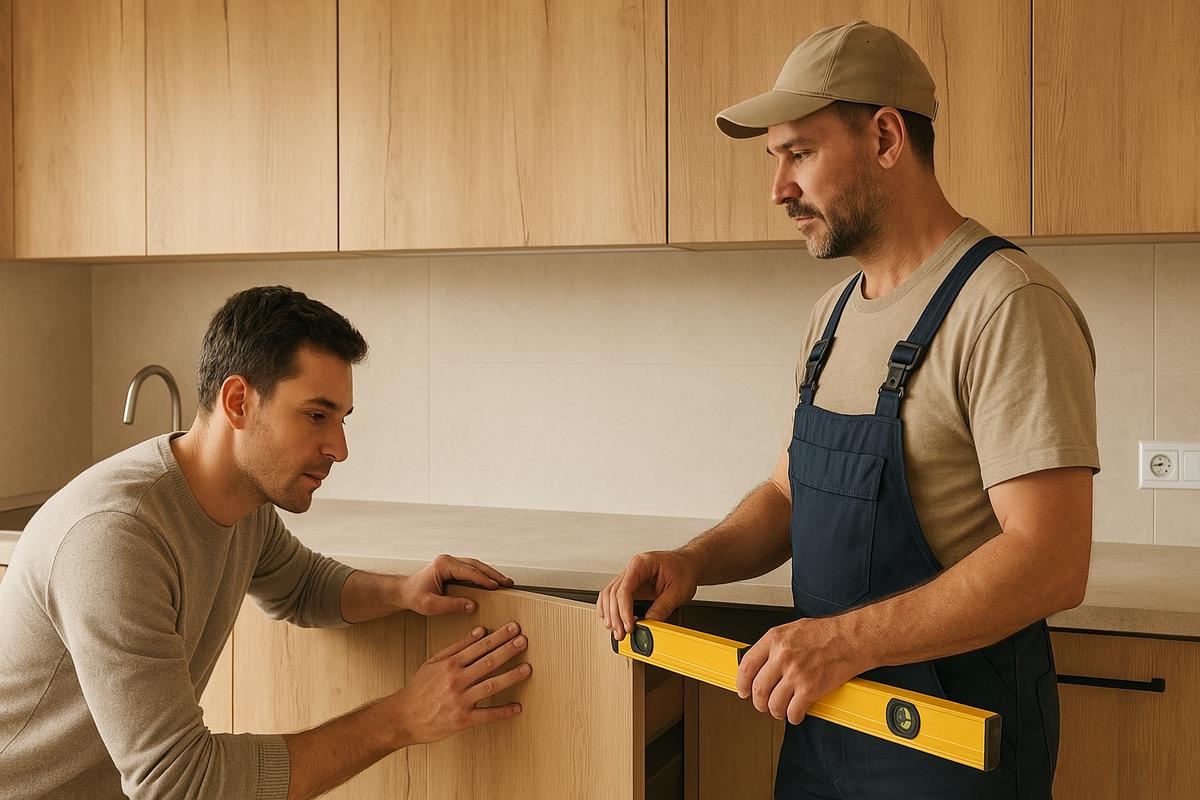
Accepting a Custom Kitchen: Checks Before Final Payment
The kitchen is installed, fronts look neat and the installer asks you to sign acceptance and settle the balance. Check more than appearance: does it match the order, can drawers open beside appliances and are the agreed connections complete?
Acceptance compares the installed kitchen with the final agreed specification and records the outcome. Payment, remedial work and documents should follow the agreement and applicable rules rather than “this is how it is normally done”.
📋 Assemble the final order
Prepare the contract, approved design, specification, material samples and agreed changes. Identify the final version where decisions changed during production.
For important items, establish dimensions, material, colour, finish, internal fittings, hardware and cut-outs. “Like the picture” rarely provides an unambiguous comparison.
Identify responsibility for measurement, design, manufacture, installation and connections. Several contractors may participate, but a disputed junction should not be left without an accountable party.
If records are missing, collect them first. Otherwise a defect discussion can become an argument about what was ordered.
Agree inspection conditions
Ask for clean surfaces and access to cupboards, plinths and intended service points. Inspect under good normal lighting rather than decorative lighting alone.
Do not confirm the result before being able to inspect. Equally, do not assume a right to withhold an arbitrary amount: payment and responses to non-conformity depend on the contract and circumstances.
Arrange time for the contractor's representative to attend. Follow a sequence instead of opening everything at once and overlooking details.
Check dimensions and module positions
Start with the layout: cabinet provision, worktop height, appliance positions and passages. Compare measurements with the approved design and actual room.
Inspect junctions with walls, windowsills and doors. Open the room door and assess interactions with fronts and handles. Where a specific appliance was designed in, use its actual characteristics.
Do not apply one universal gap tolerance to every system. Establish installation requirements through the order, product documentation and professional assessment.
For a discrepancy, record its size and location before assuming the cause. Measurement error, a changed wall and incorrect manufacture are different circumstances.
Inspect fronts and visible surfaces
Check doors, edges, handles and side panels. Record chips, scratches, departures from approved colour or samples, and visible junction defects.
Distinguish protective film, dirt and damage. Agree removal where needed for inspection. Do not use aggressive chemicals or abrasives to prove material quality.
Compare items under the same light. Photographs preserve observations, while the approved physical sample helps with colour and texture.
An agreed, documented substitution matching the final order is not automatically a defect. Conversely, “we now make it this way” does not establish your consent.
Test opening in working combinations
Open doors and drawers in sequence and check normal closing and specified mechanisms without force. Then check neighbouring handles, corners, appliances and walls.
Assess access to corner units, pull-out baskets and waste storage. Can they be used as intended, rather than merely demonstrated once in an empty installation?
Do not overload drawers or test fixings with your body weight. Product documentation determines permitted loads and use. A specialist should assess a doubtful fixing, not a customer's strength test.
Worktop, cut-outs and junctions
Compare material, shape, edging and joints with the order. Inspect cut-outs for the sink, appliances and other agreed items, including finish and servicing access.
Clarify protection and sealing required for the particular materials. A neat visible bead does not establish that every concealed detail was assessed.
For an inaccessible connection, request an explanation or appropriate evidence. Do not dismantle the installed kitchen yourself to investigate.
Do not test a surface with flame, knives or prolonged flooding. Acceptance should involve safe inspection rather than testing to destruction.
🔧 Connections need the relevant specialists
Separate furniture completion from plumbing, electrical, gas and ventilation readiness. Placing an appliance inside a niche does not establish a safe connection.
Ask the responsible contractors to confirm completion, start-up conditions and maintenance access. Operating checks should follow safe intended use after authorised connection.
Necessary valves, sockets and service points should not become inaccessible. If ordinary maintenance would require breaking finishes, resolve the question before closing acceptance.
Do not start incompletely connected appliances or remove protective covers yourself. Record which checks remain and who will complete them.
Check contents and completeness
Compare shelves, dividers, baskets, fixings and other agreed components. Establish what is included, separately handed over or outstanding for later delivery.
Collect material-care, hardware-use and servicing instructions. Ask for component identification so future replacement does not depend on guessing the model from appearance.
For warranties, establish responsibility and the reporting procedure. A general warranty claim is insufficient without scope, conditions and contacts.
Create a specific snagging record
Describe the observation, link it to the order and record the proposed response. Distinguish established non-conformity from a question needing further investigation.
| Field | What to record |
|---|---|
| Component and position | For example, lower drawer right of the sink |
| Basis | Final specification or agreed change |
| Observation | Exact difference or failed function |
| Evidence | Photograph, measurement or joint check |
| Action | Adjustment, replacement, explanation or investigation |
| Responsible party and date | Who acts and by which agreed deadline |
| Recheck | How the result will be confirmed |
| Payment connection | What the contract provides and what is separately agreed |
In a hypothetical example, a drawer contacts the neighbouring handle although the design intended independent opening. Identify both components, agree a remedy and repeat the function afterwards.
“Minor issues remain” is less useful than a precise record because it describes neither scope nor the expected outcome.
Align payment and documents
Compare the completed stage with contractual payment conditions. For a dispute, obtain advice on applicable remedies and procedure rather than choosing an arbitrary retention percentage.
Do not sign a no-observations statement when observations exist. Propose a record reflecting what is accepted, untested or agreed for correction. Its legal effect depends on the wording and circumstances.
Keep copies, photographs and evidence that observations were delivered. After correction, test the function that caused the issue as well as appearance.
Frequently asked questions
Are attractive fronts enough for acceptance?
They cover only part of it. Check completeness, geometry, mechanisms and agreed connection readiness.
Can I withhold any amount until satisfied?
There is no universal rule. Review the agreement and applicable law for payment and permitted actions.
Is adjustment always a manufacturing defect?
Not necessarily. Record the symptom and obtain an assessment of cause and remedy rather than assuming either.
✅ Close acceptance with a verifiable outcome
Compare the installation with the final order, test safely and record observations and the reinspection process. Clear documents and an agreed result prevent different understandings of outstanding obligations.
When choosing an apartment with a kitchen through BuyHome, establish which furniture and appliances are included and which documents accompany them. This brings the equipment into the pre-purchase inspection.
Date added: 05.11.26
Related articles






Related categories

Renovation costs
A practical guide to apartment renovation costs in Georgia—labor and materials, timelines, common pitfalls, and how to control your budget.

Choosing a contractor
How to choose a renovation contractor in Georgia: where to look, what to verify, and how to control quality so you don’t lose time or budget.

Interior
Interior trends in Georgia, layouts, and practical apartment solutions: how to choose a style, plan zones, and create a design that works for living or renting.
Benefits of buying property on BuyHome.ge

Best property prices
No commission for buyers
Up-to-Date Properties on the Website
Free property selection
Free transaction support
Free expert consultations

Submit a Request
for a Consultation!

2026 © All rights reserved