

BuyHome.ge
+995 595 33 78 33


Building Equipment Noise: Checking Apartments Near Lifts, Pumps and Ventilation
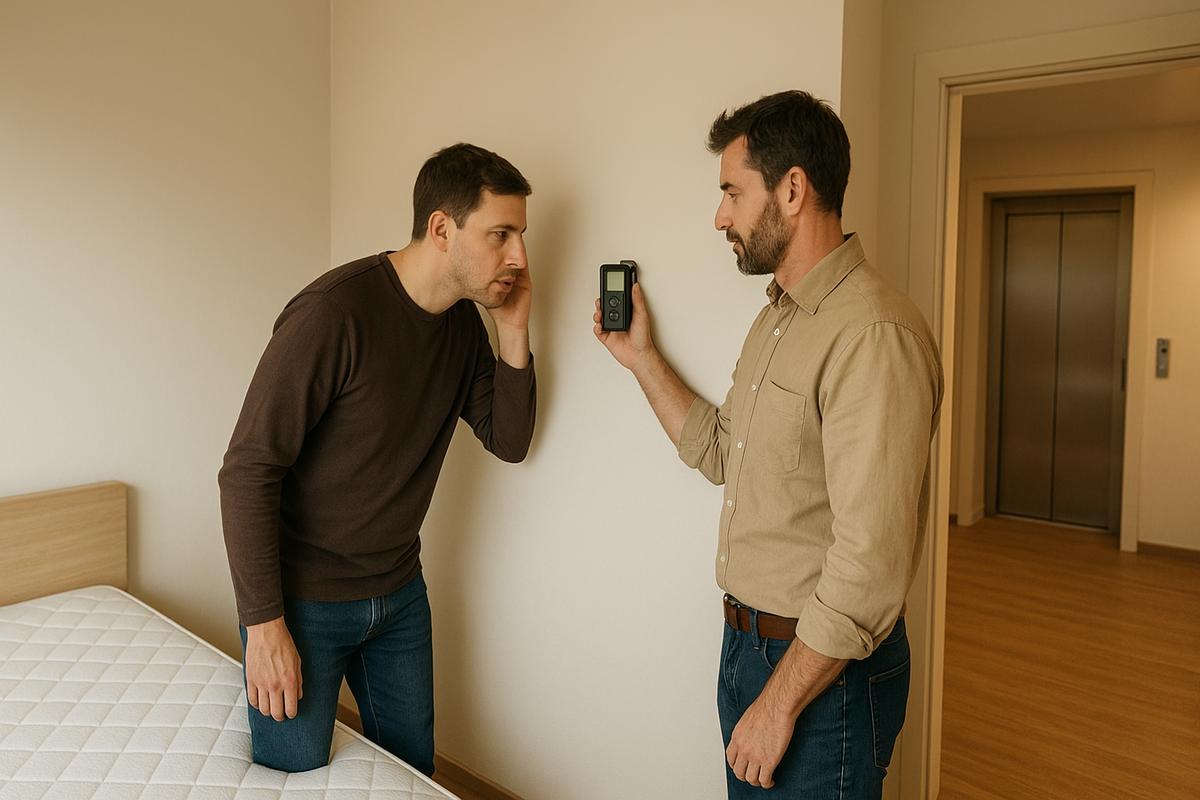
Building Equipment Noise: Checking Apartments Near Lifts, Pumps and Ventilation
An apartment can be quiet at a viewing yet develop a steady hum later in the evening, vibration when a pump starts or noticeable lift sounds at night. These differ from traffic or neighbours' conversations: the source may be elsewhere in the building and operate only under particular conditions.
A quiet visit demonstrates the apartment's condition at that moment, not under every operating mode. Before buying, establish which equipment is nearby, when it runs and what evidence relates to the particular apartment.
🔎 Map the possible sources
Ask the seller or building manager for a plan showing nearby technical spaces and an explanation of their use. Consider rooms above and below, roof installations and equipment beneath the building as well as your own floor.
Establish the location of:
- lift shafts and associated equipment;
- water, heating and other pumps;
- ventilation units and external mechanical plant;
- the standby generator and supporting systems;
- pool or spa equipment, where provided;
- equipment serving commercial units in the building.
Do not identify the cause solely by the nearest technical-room door. A location on a plan gives you something to investigate, not proof that a particular unit produces the sound. Diagnosis requires a specialist and comparison with operating conditions.
Describe sound and vibration separately
You may notice a hum, whistle, click, rattle or short impact. Vibration may be felt through the floor, wall or furniture. Describe what you observe rather than assigning a technical diagnosis.
For example, “a low hum in the bedroom began at 19:12 and stopped several minutes later” helps organise another check. “The pump is definitely broken” establishes little without an investigation.
Compare rooms and safely accessible positions, and observe with the window open and closed. A sound remaining audible does not by itself identify its transmission path. It gives the specialist a more useful starting point.
Do not knock on pipes, remove panels or switch off equipment. Viewing an apartment does not authorise interference with shared building systems.
Why equipment may be silent during a visit
Systems may start according to a schedule, changing demand or a particular mode. Establish the conditions for the actual building. A pump that did not operate during the visit has not been demonstrated to be silent.
In a new development, ask which installations are operational, whether adjoining sections are occupied and whether amenities are in normal use. Partial operation limits the conclusions you can draw. A quiet, largely empty building does not demonstrate what happens after occupation.
For generators, ask about authorised test arrangements rather than requesting an improvised start-up. Responsible staff must agree the operation and safe conditions. If a relevant mode cannot be observed, record that gap before making a decision.
Arrange a check with the building manager
Request a named technical contact. Provide the apartment number, relevant rooms and your observations. The aim is to inspect operating conditions rather than obtain a general verbal promise of silence.
Useful questions include:
- Which installations are near the apartment and who maintains them?
- What are their schedules, start conditions and seasonal modes?
- Can you remain in the apartment during agreed operation?
- Are there recorded complaints about this source and records of completed work?
- Have measurements been taken, where and under which conditions?
- Who receives reports and arranges further investigation?
When asking about previous complaints, do not request other residents' personal information. You need the technical issue and response, not private correspondence.
📋 Evidence to request for each source
| Possible source | Observation in the apartment | Evidence or action to request |
|---|---|---|
| Lift | Sound during travel, starting and stopping | Shaft location, maintenance information and agreed repeat visit |
| Pumps | Hum or vibration during cycles | Installation location, operating mode and investigation if needed |
| Ventilation | Background sound or change at start-up | Operating modes and specialist assessment |
| Generator | Sound during an authorised test | Test arrangements and relevant assessment records |
| Pool or spa | Background during equipment operation | Schedule and maintenance arrangements |
This is an investigation plan, not a list of defects found in every development. The presence of equipment does not automatically make an apartment unsuitable.
Conduct a meaningful repeat viewing
Choose the time using the operating information you obtained. For your own home, focus on the bedroom and workspace. For a long-term rental, consider normal use of all living rooms.
Reduce unrelated background sound where agreed and safe: turn off your own music and unnecessary domestic appliances. Do not disable required systems or alter shared equipment yourself.
Stay long enough to observe the agreed cycle, rather than listening for a few seconds at the door. Record the event's start and finish, the room, window positions and which equipment the responsible person confirms was running. If no link has been established, write “source not identified”.
An audio recording made with the participants' agreement may preserve the character of a sound, but a phone can reproduce it differently. A missing hum in the recording does not disprove your observation, and loud playback does not establish a legal exceedance.
A phone app is not a compliance assessment
A number on a smartphone screen should not become the basis for declaring either compliance or a legal breach. Such conclusions depend on the applicable requirements, suitable instruments, measurement procedure and conditions.
Georgia has a technical regulation addressing acoustic noise, and its provisions have been amended. A table copied from an old publication should not be applied indiscriminately to every room. Where a legal assessment is required, a specialist needs to establish the current text, its scope and the proper procedure.
When commissioning an investigation, request the address and room, equipment operating mode, observation conditions, method, instruments, findings and limitations. Measurements outside or in another apartment should not be treated as confirmation of conditions in your bedroom.
Assess promises to fix the issue after purchase
Ask for the cause, proposed work, responsible party, deadline and method for checking the result. “We will add soundproofing” does not explain what will change or why it should work.
Consider a hypothetical example: the seller offers an additional wall panel although the vibration source has not been identified. The matter cannot yet be considered resolved. Diagnosis and a justified proposal should precede the work, followed by a repeat assessment.
If an obligation is to be included in the sale agreement, have a lawyer review its content and consequences of non-performance. Planned work is not an achieved result. Be especially cautious when the solution needs access to common property or action by third parties.
When to pause the purchase decision
A pause may be sensible if a recurring sound interferes with your intended use, its source remains unknown, normal operating modes have not been checked or responsible parties will not discuss investigation. A lower price does not clarify an unknown repair scope.
Equally, proximity to a lift or technical room is not an automatic reason to reject a property. Base the choice on verified conditions in the actual apartment and your tolerance of any remaining background sound.
Frequently asked questions
Is a quiet daytime visit enough?
First establish which systems were operating and which modes remain unchecked. Then decide whether another viewing is necessary.
Does a new building guarantee no plant noise?
Building age does not replace checking installation, maintenance and real operation. In an unoccupied building, some conditions may still be unknown.
Can internal decoration fix everything?
That requires diagnosis. A reliable remedy cannot be selected before the source and transmission route are understood.
✅ Keep a clear record before buying
Collect equipment locations, operating information, your observation log and any specialist report. Distinguish completed work from promises and record unresolved questions.
When searching with BuyHome, tell us if you are particularly sensitive to hum or vibration. We can help include the relevant questions and repeat visits in the selection process; technical conclusions belong to qualified specialists.
Date added: 02.11.26
Related articles






Related categories

How to choose a complex
How to choose a residential complex in Georgia — key criteria affecting comfort, liquidity, and investment returns, with common mistakes explained.

How to complete a deal
How to complete a real estate purchase in Georgia — step-by-step breakdown of the process, documents, timelines, and common buyer mistakes.

Bank account opening
How to open a bank account in Georgia — requirements for foreigners, required documents, timelines, and key banking specifics.

Utilities guide
Utility bills in Georgia — overview of electricity, water, gas, internet, and building maintenance costs, with payment methods and expense calculations.
Benefits of buying property on BuyHome.ge

Best property prices
No commission for buyers
Up-to-Date Properties on the Website
Free property selection
Free transaction support
Free expert consultations

Submit a Request
for a Consultation!

2026 © All rights reserved