

BuyHome.ge
+995 595 33 78 33


Buying an Apartment with EV Charging: What to Verify
Buying an Apartment with EV Charging: What to Verify
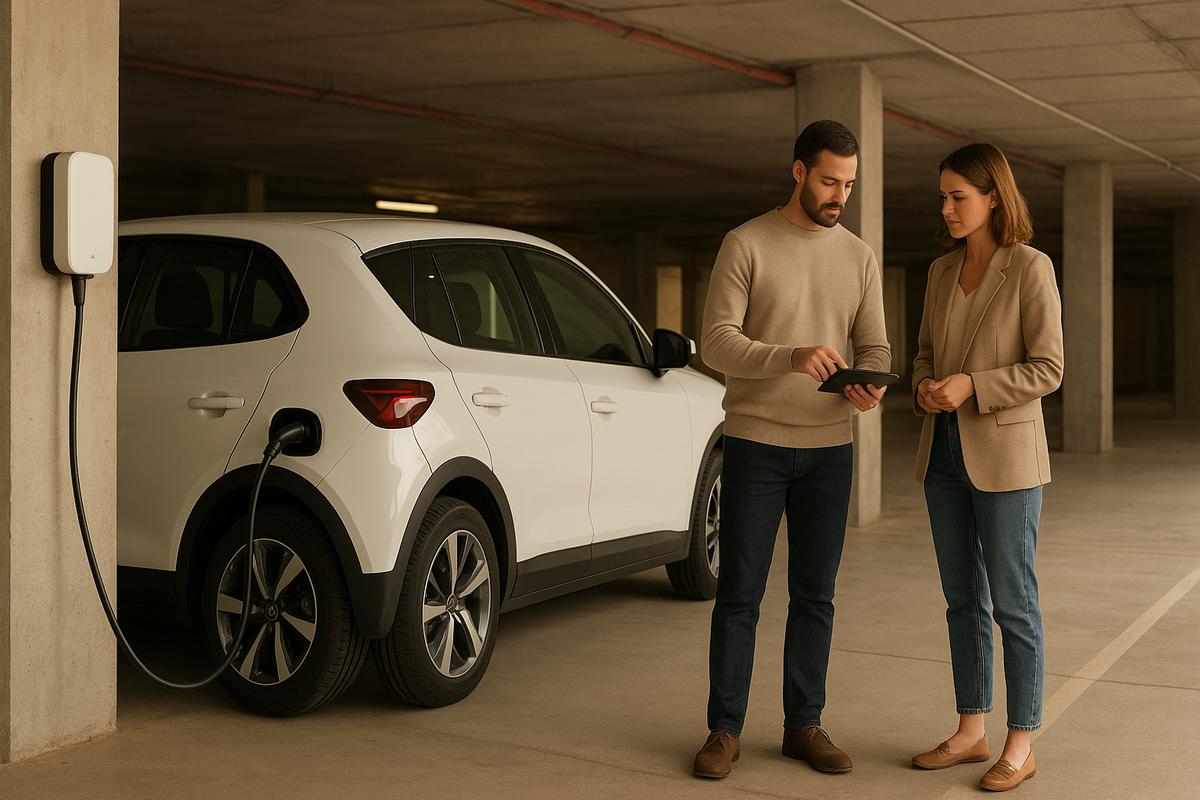
“The complex has EV charging” can describe very different arrangements: your own charger beside an allocated space, a shared station with a queue, or a promise to install equipment after completion. Buyers need more than a photograph. They need a dependable way to charge their own vehicle under understood conditions.
Check the whole chain: rights to the space → charger access → compatibility → payment → maintenance. An unconfirmed link means charging should not yet be treated as an assured benefit of the apartment.
Distinguish three arrangements
| Arrangement | First checks |
|---|---|
| Private charger at an allocated space | Space rights, approvals, supply and equipment ownership |
| Shared station | Queue, access hours, parking rules and charges |
| Future installation only | Written commitments, launch conditions, timing and an alternative |
None is automatically best. A shared station may suit one owner but be impractical for another if it is available only at the wrong time.
Start with your vehicle and driving routine
Define the actual task before viewing: which vehicle you own, how much energy you usually need between journeys, when you return and how long the car remains parked.
Do you need overnight charging several times a week or a shorter daily session? Will you use the car during the hours when other residents return? Do longer trips change your needs?
Maximum advertised power is not the only criterion. What matters is whether the arrangement replenishes your typical requirement in the available time. Confirm vehicle limitations and compatibility through its documentation and a competent charging specialist.
Parking rights and charging rights are separate
Establish what comes with the apartment: a separately owned space, a defined right to use an area, or access to shared parking without a guaranteed position.
Then establish who owns and operates the charger and whether use depends on another agreement. Equipment beside a space is not proof that it is included in the sale.
Georgia's homeowners' association law distinguishes individual and shared property and addresses its management. Where shared structures or services are involved, do not assume the seller alone can authorise the arrangement. Check the necessary decisions and authority against the building's documents.
Request evidence of space rights, infrastructure approvals and access after a change of ownership.
“Can be installed” is different from “installed and working”
If the proposal is to add a private charger later, confirm feasibility before valuing it as an apartment feature.
A specialist needs to assess available capacity, cable routes, existing infrastructure, loads, metering and protective arrangements. The presence of a nearby socket does not resolve these questions.
Before buying equipment, request an assessment of the existing infrastructure and available capacity, a connection design, an installation estimate and servicing terms. The charging unit is only part of the overall budget.
Do not rely on informal instructions for a DIY connection. Obtain an assessment and agreed work scope from an appropriate professional.
Check compatibility with the exact vehicle
Request the station model, photographs, technical documents and operating conditions. Give the specialist the precise vehicle version and charging information.
Check:
- connector and charging-method compatibility;
- vehicle and station limitations;
- whether you need to supply a cable;
- manufacturer-approved arrangements;
- authorisation and payment;
- whether an agreed test with your vehicle is possible.
A visually similar connector does not prove compatibility. Refer adapter questions or modifications to the manufacturer and a competent specialist.
Ask separately whether the station has a tethered cable or requires your own. Check cable and connector compatibility with your actual vehicle.
Advertised power and actual charging time
A maximum rating does not mean the car receives that power continuously. Results depend on the car, available supply, station operation and current charging conditions.
For a basic teaching example, adding 24 kWh to a battery over eight hours requires an average battery-energy transfer of 3 kW. Actual grid consumption and time may differ, including because of losses and system limits.
This calculation does not specify electrical installation requirements or establish equipment suitability. It helps frame a question about your normal overnight use rather than an advertising maximum.
Where power is shared, ask what happens when several cars charge simultaneously.
Investigate the shared-station routine
A functioning connector is only part of shared access. Ask:
- Who may use it: residents, guests or the public?
- Can time be reserved, and how are conflicts resolved?
- Is parking duration limited?
- Who moves cars after charging finishes?
- Is it available during your usual hours?
- What happens if the app, connection or equipment fails?
Return at a normal resident-arrival time if possible. A vacant charger at midday does not establish evening availability. A few observations are not a statistical guarantee, but they help test the stated arrangements.
Establish the complete cost
Do not equate the charging bill with the apartment's household electricity tariff. A proposal may charge for energy, session time, parking, subscriptions, maintenance or remaining connected after completion. Establish what applies to this particular service.
Request the full tariff, including electricity, connection time, idle fees after charging and parking. Ask where to check current prices and how changes will be communicated.
Request the charging unit and current price, fixed or extra fees, minimum payment, tariff-change conditions, transaction records and parking costs independent of charging.
Compare the complete cost and practicality of the same intended session rather than one headline figure.
Who maintains the equipment?
There should be a clear responsible party. Ask for service contacts, fault-reporting arrangements, ownership information and the process for restoring operation.
When buying a charger with the space, obtain its documents, warranty terms, service history and access-transfer arrangements. For shared infrastructure, establish who makes repair decisions and pays.
Do not assume maintenance-free ownership. Do not open defective equipment or use improvised connections.
If the developer only promises future charging
Turn the promise into specific questions: where will the station be, what access will you receive, who is responsible for launch, what timing and conditions are written down, and will there be extra charges?
A rendering or amenities list is not equivalent to a detailed contractual obligation. Have a lawyer check the agreement and annexes if charging is material to your purchase.
Assess a fallback. Can you use the car while the promised station is unavailable? A nearby public option also needs checking for actual access and current conditions.
A compact property assessment
| Item | What should be established |
|---|---|
| Space | Legal basis and extent of use |
| Equipment | Model, owner and actual operation |
| Supply | Professionally confirmed feasibility |
| Vehicle | Confirmed compatibility |
| Access | Hours, authorisation and queue |
| Payment | Complete charging model |
| Service | Responsible party and reporting route |
Record an unanswered point as “unconfirmed,” not automatically “included.”
Frequently asked questions
Is a normal socket beside the space enough?
Its location does not establish suitability. Supply and equipment require professional assessment.
Does a shared charger guarantee an available parking space?
No. Parking rights, access and queue arrangements need separate confirmation.
Can a private charger be removed when selling the apartment?
That depends on equipment ownership, transaction documents and agreed terms. Clarify exactly what the offer includes.
Use the findings in your property search
Tell BuyHome your vehicle model, driving routine and whether an allocated space is essential. We can include those requirements in the search and request relevant confirmations.
Browse property listings and assess charging as a real service with defined conditions rather than a line in a presentation.
Date added: 01.11.26
Related articles





Related categories

How to choose a complex
How to choose a residential complex in Georgia — key criteria affecting comfort, liquidity, and investment returns, with common mistakes explained.

How to complete a deal
How to complete a real estate purchase in Georgia — step-by-step breakdown of the process, documents, timelines, and common buyer mistakes.

Bank account opening
How to open a bank account in Georgia — requirements for foreigners, required documents, timelines, and key banking specifics.

Utilities guide
Utility bills in Georgia — overview of electricity, water, gas, internet, and building maintenance costs, with payment methods and expense calculations.
Benefits of buying property on BuyHome.ge

Best property prices
No commission for buyers
Up-to-Date Properties on the Website
Free property selection
Free transaction support
Free expert consultations

Submit a Request
for a Consultation!

2026 © All rights reserved