

BuyHome.ge
+995 595 33 78 33


Avlabari Apartments: Comparing an Older Building and a New Development
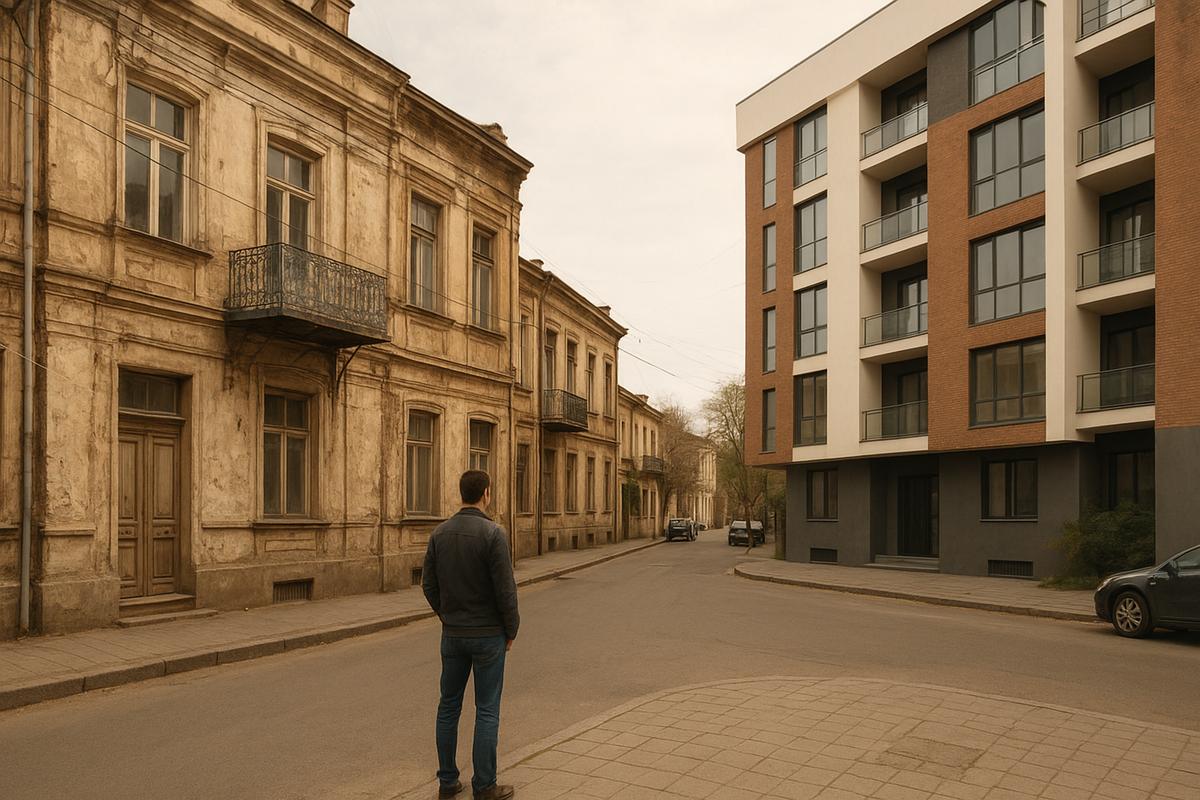
Avlabari Apartments: Comparing an Older Building and a New Development
Two Avlabari listings may advertise essentially the same location: an apartment in an older house and one in a new building nearby. Map proximity does not make stairs, courtyards, running costs or future renovation access equivalent.
Compare two actual buildings in a similar micro-location rather than an image of old Tbilisi against a new-development presentation. Age is an initial characteristic; documents, condition and your requirements determine suitability.
📍 Establish whether the addresses are equally convenient
Mark real entrances and walk to relevant destinations: transport, shopping, parking or a regular journey. A neighbouring building may have its exit on another side and a different route.
Visit at comparable times. A quiet morning courtyard and a busy evening street otherwise create an uneven comparison. Test the return with everyday shopping too.
List shared location conditions. A feature applying to both should not be counted as a unique advantage of one building type. Retain genuine differences in entrances and passages.
Walk from street to apartment door
Assess usable passages, steps, thresholds, light and passing space. Is a key needed for the common courtyard, and who provides access?
Test any lift in operation: its approach, stops, doors and suitability for your needs. A shaft or promised commissioning date is not a working lift. Without one, walk the stairs at a normal pace rather than judging a photograph.
For a pushchair, bicycle or older relative, the complete sequence matters. One convenient element cannot resolve a section that makes the journey unworkable.
Do not assume older means narrow or new means accessible. Measure relevant positions and obtain specialist assessment where needed.
Inspect common areas and the courtyard
Identify what residents actually use: passages, storage, landings and courtyards. Separate common property, private land and areas with an unclear basis of use.
An empty spot beneath a tree is not necessarily your parking place, nor is a corner in a shared room your storage. Request rules, records and management explanations where these affect the decision.
In a new building, establish readiness of advertised areas. In an older one, assess existing spaces and maintenance arrangements. A future courtyard presentation is not completed work, and the seller's habit is not a guaranteed right.
Age cannot replace structural assessment
In both buildings, a technical specialist should establish inspection scope and whether further investigation is required. Gather available plans, repairs and alterations instead of diagnosing reliability from an attractive façade.
Describe cracks, water marks, altered walls and common structural conditions for professional review. A mark is not automatically proof of an unsafe building, but “it is old” should not close the question either.
Fresh finishes in a new building do not establish the absence of technical issues. Ask about operating systems, available documents and assessment results relevant to the property.
A written outcome should identify access, material reviewed and limitations. Inaccessible elements cannot be presented as fully checked.
🧾 Verify heritage conditions by address
Do not assign identical heritage status and restrictions to every older Avlabari house. Establish applicable conditions for the particular building and territory.
Planning new windows, an external unit, balcony work or façade alterations? Identify the required approvals first. Similar-looking neighbouring homes need not have the same legal regime.
A new building should not automatically be assumed free of all territorial conditions either. An architect and lawyer should establish how rules apply to your actions rather than simply label the area historic.
Compare services and maintenance
Review water, drainage, electricity, ventilation and access to shared systems. Where are service points, who maintains them and what has changed inside the apartment?
Request current maintenance arrangements, charge components and planned works. Do not compare “free in an old house” with “expensive in a new one” without evidence. Recurring charges and possible separate works belong to different budget lines.
Establish common-property decision procedures and how to report problems, arrange specialist access and approve work. The seller's personal relationship with a neighbour or employee is not an operating arrangement for the new owner.
Test renovation and furniture delivery
Trace the route from a lawful vehicle stop to the apartment. Measure narrow sections, turns, doors and lift access. Establish working hours, protection of common areas and waste removal.
Older-building restrictions might involve stairs or a courtyard; newer ones might involve access rules. These are possible factors, not universal characteristics.
Ask a contractor to assess logistics on site before estimating. “We will carry it somehow” does not establish cost or permission. Do not assume access across private land or storage in common passages.
📋 Compare two hypothetical apartments
These are teaching examples, not actual offers or standard Avlabari conditions.
| Criterion | Apartment A, older building | Apartment B, newer building |
|---|---|---|
| Street approach | Courtyard and stairs inspected | Entrance and operating lift inspected |
| Main restriction | No lift for your daily requirement | Guest access needs clarification |
| Shared areas | Inspected; works procedure unclear | Part of the promised area unfinished |
| Structure | Observed alteration needs assessment | Available documentation needs review |
| Renovation | Material delivery to assess | Work and lift protection to agree |
| Costs | Potential common works to clarify | Recurring charge components to establish |
| Documents | Property and applicable restrictions | Property and promised readiness |
There is no automatic winner. If a lift is essential, its absence matters regardless of price. If a new facility is unfinished, it cannot be valued as operational.
Budget for readiness to live
Add evidenced costs to the price: necessary work, logistics, system activation and confirmed charges. Mark unknown items and the next step needed to clarify them.
Do not use one generic renovation cost per square metre for different scopes. Attractive finishes may conceal unresolved service questions, while a simpler interior may have a clearer adaptation plan.
Separate initial and recurring costs. One monthly bill cannot establish which option is cheaper without the building condition and your required changes.
Collect the evidence before deciding
Gather ownership records, plans, alteration information, applicable work conditions, maintenance arrangements and a technical report. Add your observations on access and logistics.
Return where important conditions were not visible: evening access, lift operation or the courtyard after rain. Do not recreate adverse conditions through unsafe experiments; arrange the necessary professional assessment.
Frequently asked questions
Is a new building always more reliable?
Age does not replace documentation and technical assessment. Review actual condition and evidence.
Are façade changes always prohibited in older buildings?
Requirements depend on the building, territory and work, not the neighbourhood name alone.
Can nearby properties be treated as having the same surroundings?
Check entrances and real routes. Close addresses can create different everyday conditions.
✅ Choose against your requirements
Define essentials, then compare location, access, technical condition, legal arrangements and budget. Resolve material questions before settlement rather than choosing by age alone.
When searching for Tbilisi apartments with BuyHome, consider both formats. Tell us how much a lift, courtyard and renovation feasibility matter so actual Avlabari buildings can be compared against your needs.
Date added: 05.11.26
Related articles






Related categories

Moving to Batumi
Moving to Batumi: how to choose housing and an area, handle documents, navigate transport, schools and healthcare, and adapt comfortably to seaside life.

Neighborhood guides
Neighborhood guides for Batumi and Tbilisi: comparing areas for living, renting and investing, prices, infrastructure, and 2025 pros & cons.

Cost of living
Cost of living in Georgia: housing, groceries, transport, healthcare, services and utilities — real budgets, examples and hidden expenses.

Healthcare & schools
Healthcare and schools in Georgia: private vs public options, pricing, quality, insurance, choosing clinics and schools, tips for foreigners and families.

Infrastructure in Georgia
City infrastructure in Georgia: transport, roads, healthcare, schools, services and retail — how district development affects quality of life and real estate value.

Weather in Batumi
Batumi weather by months and seasons: air and sea temperatures, rainfall, humidity, and wind. What to consider for comfortable living and renting by the sea.
Benefits of buying property on BuyHome.ge

Best property prices
No commission for buyers
Up-to-Date Properties on the Website
Free property selection
Free transaction support
Free expert consultations

Submit a Request
for a Consultation!

2026 © All rights reserved