

BuyHome.ge
+995 595 33 78 33


Buying Parcel Pickup Premises in Georgia: How to Assess the Property
Buying Parcel Pickup Premises in Georgia: How to Assess the Property
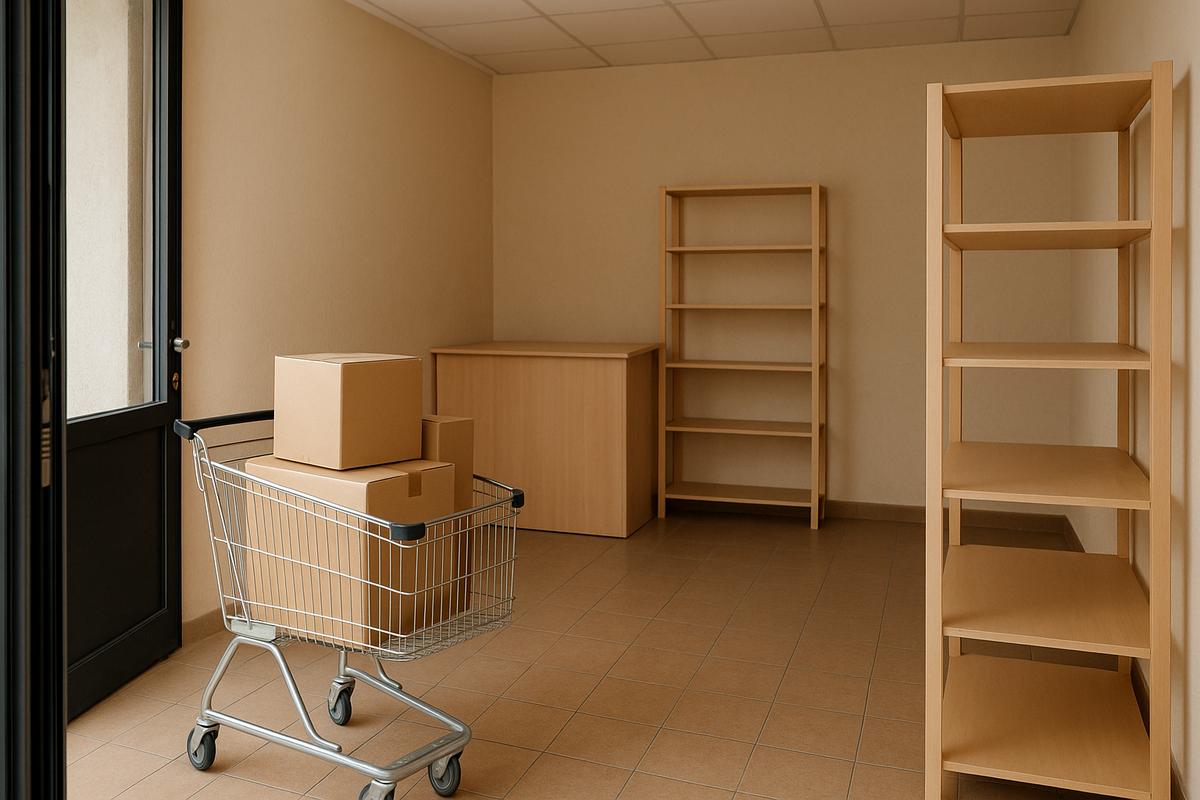
Parcel pickup premises need more than a ground-floor location and a visible shopfront. The complete chain matters: a delivery vehicle stops lawfully, the courier moves parcels into storage, staff retrieve the right item and customers collect it without blocking the residential entrance.
Before buying, confirm suitability for the intended operator's actual format. The popularity of delivery services does not guarantee demand at every address, a signed lease or a particular investment return.
📦 Start with the operator's written brief
If buying to let to a prospective operator, obtain its requirements before viewings. Establish who decides on the address and what preliminary approval means: interest, a technical review or readiness to contract on agreed terms.
The brief should identify:
- collection, returns and other intended operations;
- total space and separation of customer and storage areas;
- typical parcel dimensions and handling methods;
- delivery schedule and opening hours;
- entrance, connectivity, power and security needs;
- proposed alterations and approvals;
- the process for final address confirmation.
One operator's preferences are not mandatory standards for every pickup point in Georgia. Without an identified company, assess possible formats as hypotheses and retain that uncertainty in the purchase appraisal.
Unloading starts outside
Inspect where the delivery vehicle could actually stop. An empty area in front of the window does not establish a right to park or unload. Check signs, markings, ownership and current rules for that location.
Trace the vehicle approach, stopping position and route from the vehicle to the door. Would it block a pavement, another person's entrance or a traffic lane? Regular rule-breaking is not an acceptable foundation for the operating process.
Where private land is involved, establish its owner and the basis for access. The seller's informal arrangement with security may not provide the same conditions after purchase.
Check unloading times separately: early or late access may differ. Confirm arrangements with the people who control them rather than relying on a quiet, empty area at the viewing.
Trace the courier's trolley route
With permission, inspect the route from the proposed stopping point to storage. Measure actual clearances against the operator's handling equipment. Steps, a high threshold and a heavy door can change feasibility.
Look at turns, door swing, surfaces and intersections with customer movement. If deliveries pass through a shared lobby, establish access rules, hours and whether trolley use is permitted.
Do not test loads where doing so is unsafe or obstructs others. An agreed inspection and measurements are enough for an initial assessment. Specialists should address load calculations and technical solutions.
Make the customer entrance understandable
Approach from several directions. Can customers identify the actual door rather than just the window? Is it findable without a phone call? What is the approach like after dark?
Check steps, thresholds, usable passage widths and space for a queue within the unit. Applicable accessibility, escape and safety requirements need an assessment of the property and proposed design; “the entrance looks convenient” is not a substitute.
If customers must wait in a common corridor, treat that as a material issue. Do not include shared or third-party space in the usable operating area without confirmed rights.
📋 Separate customer and storage functions
Place collection, storage, returns and the staff workstation on a measured plan. Entrances, service rooms, passages and equipment reduce the area available for shelving.
| Area | What to check | How to confirm |
|---|---|---|
| Collection | Staff and customer positions, queue | Dimensioned layout |
| Storage | Shelving and access to parcels | Operator requirements and actual arrangement |
| Returns | Separation from other operations | Agreed process plan |
| Unloading | Trolley route and temporary holding | Route and access check |
| Staff facilities | Workstation and supplies | Layout and applicable requirements review |
Shelving and parcel weights require consideration of floors, fixings and safe operation. Photographs or a claim that the unit was previously a warehouse do not establish suitability. Required loads depend on the design and real operation, not a universal number copied from another proposal.
Protect goods from moisture and damage
Inspect accessible walls, floors, window junctions and service entries. Investigate water marks and their cause. Fresh finishes do not replace evidence that a leak was resolved.
Establish responsibility for the roof, façade, shared pipes and emergency access. Basement or partly below-ground space deserves a professional assessment of storage conditions and identified risks; a low purchase price does not resolve them.
Obtain temperature, humidity and handling requirements from the operator. Do not assume every category of goods accepts the same storage conditions. This is a property suitability assessment, not instructions for storing every product type.
Connectivity, electricity and security
Check the required internet connection and signal inside, including the back of the storage area. Confirm connection conditions with the provider instead of assuming that a neighbour's service proves yours.
Compare the electrical installation with workstations, lighting, climate equipment and intended security systems. Have an electrician assess capacity and condition.
Agree access-control and security installations. If cameras are proposed, assess lawful use, fields of view and data handling separately. Property ownership does not provide unrestricted permission to film neighbours and shared areas.
Ownership of the unit and rights around it
Check a current registry extract, cadastral code, plans and the match between documents and actual condition. Use the official real estate registry services for initial records.
Establish rights over the unloading area, shared entrance, façade and proposed sign position separately. Buying the internal floor area does not itself confirm every intended use of adjoining land.
A lawyer and designer should check intended use, alterations, approvals and common-property obligations. Commercial status is not blanket permission for every operating arrangement.
Residential neighbours and operating hours
Imagine a full day: deliveries, trolley movement, doors opening, customers waiting and closing late. Which activities affect residents? Where could access or vehicle stopping create conflict?
Review building rules and the authority of anyone confirming access. A quiet office having attracted no complaints does not prove compatibility with a parcel operation. Ask the prospective operator to assess the real schedule.
For a letting purchase, allocate adaptation work, approvals and reinstatement responsibilities clearly. Preliminary interest must not be described as a guaranteed lease or fixed income.
Three reasons to reject an unsuitable property
First: no lawful, workable delivery route. A process dependent on prohibited stopping or unconfirmed access across private land cannot be fixed by cosmetic decoration.
Second: the operating process does not fit. Shelving fits only on a promotional sketch, the queue occupies a shared corridor or the courier blocks the only passage.
Third: critical suitability remains unverified. Unresolved damp, uncertain alteration rights or an operator unwilling to assess the address in writing leave the purchase dependent on assumptions.
These are reasons to stop the proposed use, not claims that the premises have no value. Any alternative use needs its own assessment.
Frequently asked questions
Is any ground-floor unit suitable?
No. Delivery, entrance, storage, documents and the identified operator's requirements all matter.
Can I buy first and find an operator later?
That is a possible strategy, but demand and operating format remain unconfirmed. Do not appraise it as an already secured tenancy.
Is a large window enough?
It does not establish signage rights, a convenient entrance or unloading arrangements. Check each separately.
✅ Prepare a useful property-search brief
Include the city and locations, operator or intended format, area by function, entrance dimensions, unloading method, hours, connectivity, power, alterations and adaptation budget.
Use this brief to start a commercial property search with BuyHome. We can help compare premises against operational needs. Operator acceptance and the necessary legal and technical suitability should be confirmed before purchase.
Date added: 03.11.26
Related articles






Related categories

Taxes and fees (purchase and rental)
Guide to taxes and costs for buying and renting property in Georgia: registration and related fees, rental income tax, exemptions, payment deadlines, and practical calculation examples.

Real estate legislation in Georgia
Key rules of Georgian real estate law: ownership rights, public registry registration, purchase and rental transactions, key restrictions, and practical guidance for residents and foreigners.

Developer contracts
A practical guide to developer contracts in Georgia: instalment plans and payment schedules, completion timelines, warranties, penalties, and termination terms. What to review before signing and how to reduce buyer risks.

Transaction risks and security
Seller and property due diligence in Georgia: registries, documents, encumbrances, and key risks. What to verify before the deal to protect yourself and buy with confidence.
Benefits of buying property on BuyHome.ge

Best property prices
No commission for buyers
Up-to-Date Properties on the Website
Free property selection
Free transaction support
Free expert consultations

Submit a Request
for a Consultation!

2026 © All rights reserved