

BuyHome.ge
+995 595 33 78 33


Chugureti: Choosing a Courtyard Apartment Near a Busy Street
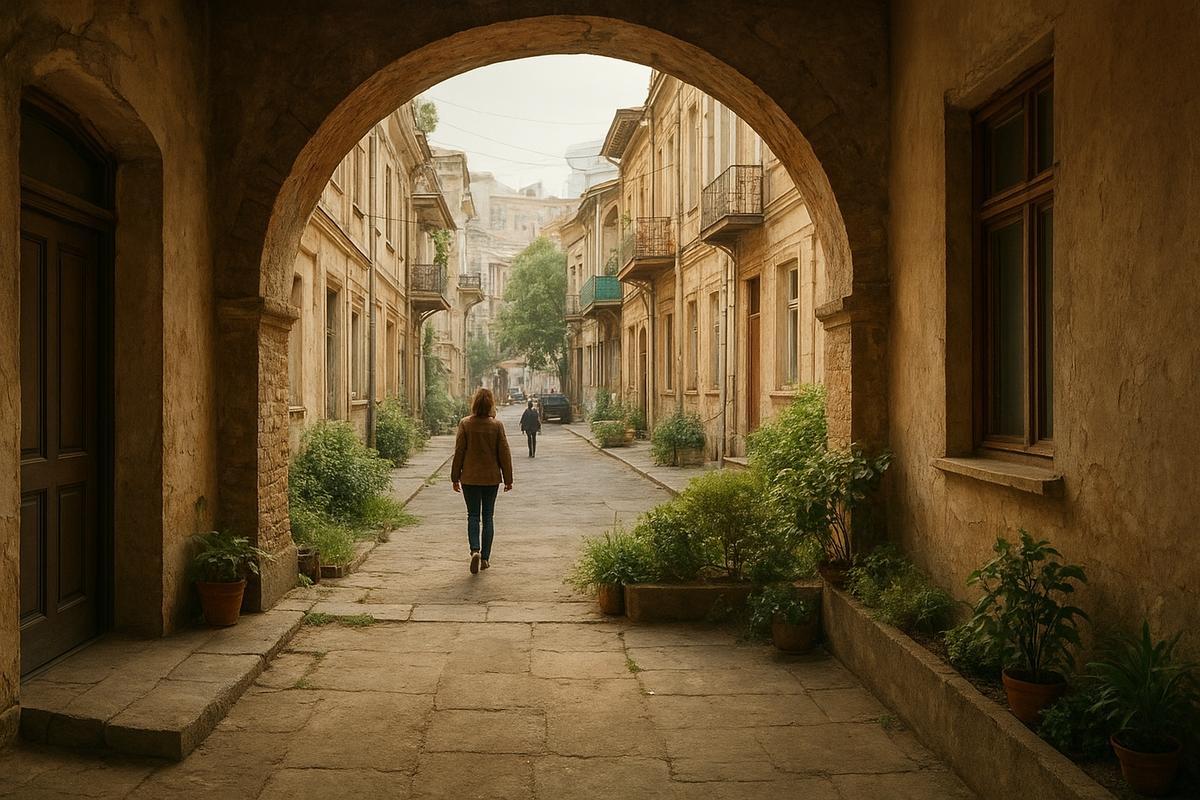
Chugureti: Choosing a Courtyard Apartment Near a Busy Street
A courtyard apartment in Chugureti may seem calmer than one facing a busy street. Depth inside a block, however, does not establish evening activity, access or delivery convenience. A street-facing apartment may offer easier entry, while a courtyard introduces different sounds and movement.
Compare actual windows and the complete route to the door at different times. Build your own map of sound sources and obstacles rather than judging the entire district.
📍 Identify the entrance and windows
Mark the street entrance, spaces crossed and orientation of main rooms. A courtyard description may mean just behind an arch, deep within a plot or beside a shared passage.
Locate the bedroom and workspace. A street-facing living room with a courtyard bedroom creates a different routine from the opposite arrangement.
Do not judge from the building entrance alone. Assess future rooms against neighbouring windows, doors, movement and equipment.
Walk from street to apartment
Agree the ordinary pedestrian route rather than only following the viewing manager. Inspect doors, arches, gates, steps, turns and lighting.
Who opens shared entrances? How would you return after dark, with a flat phone or without the usual contact? Where another person's land is crossed, establish the legal basis separately.
Measure narrow sections for a pushchair or bicycle. Consider shopping and furniture deliveries. An attractive courtyard does not remove a repeated daily obstacle.
Open gates during a visit do not establish continuing access rights. Obtain the operating explanation and necessary documents.
🔎 Separate sound sources
Record what you hear and the apparent direction. Traffic, venue visitors, closing doors and equipment need different follow-up checks.
Mark:
- traffic and vehicle stopping positions;
- business entrances and waiting areas;
- residents' and visitors' passages;
- gates, stairs and shared doors;
- visible ventilation or climate equipment;
- delivery and waste-handling locations.
If the source is unknown, say so. Proximity alone does not identify the responsible premises. A buyer's observation guides investigation rather than serving as a technical or legal conclusion.
Revisit the courtyard after dark
A daytime visit may miss normal evening use. Arrange another viewing at a time relevant to occupation and spend part of it in the actual rooms.
Compare ordinary open- and closed-window use where safe and permitted. Can you sleep or work in your usual arrangement rather than only sealing the apartment?
Confirm neighbouring activities and current hours without treating them as permanent guarantees. One weekend observation should not represent every day.
Do not provoke sound or film neighbours' private lives. Notes identifying time, position and observations are sufficient.
Consider shared passages and privacy
Courtyard windows may face a regular route used by residents. Check sightlines from permitted shared locations and whether ordinary room use requires constantly closed curtains.
Identify places where people wait, doors open and evening lighting operates. A narrow route directly beside a bedroom differs from an open courtyard farther away.
An empty viewing is not a lasting advantage. The arrangement and normal operation matter more than temporary absence of people.
Where screens, curtains or window changes are essential, verify feasibility and effect first. A proposed improvement is not a completed solution.
Test deliveries, taxis and practical tasks
Trace the route from a lawful stopping place to the apartment. Must you meet deliveries outside, cross several gates or carry shopping upstairs?
Establish guest and contractor rules. The seller's informal understanding with neighbours is not a clear procedure for a new owner.
For large deliveries, measure turns and clearances. Renovation also requires working hours, protection of shared areas and waste arrangements. Do not depend on blocking another person's passage.
Assess parking separately. An empty courtyard position does not establish an exclusive right; confirm the basis and rules.
📋 Create a practical observation map
A room plan and entrance route with a table are sufficient; a district-wide map is unnecessary.
| Position | Observe | Repeat | Further confirmation |
|---|---|---|---|
| Street entrance | Gate, passage and stopping vehicles | Evening | Access arrangements |
| Arch or common section | Narrow areas and movement | Ordinary return time | Right of passage |
| Bedroom window | Sound, light and proximity | Relevant sleeping hours | Unknown source if needed |
| Workspace | Background and normal use | Working hours | Technical assessment where required |
| Delivery point | Carrying route and visitor entry | Intended delivery time | Territory rules |
Distinguish fact, hypothesis and document in each entry. This is more useful than an assumption of permanent courtyard quiet.
Compare two hypothetical layouts
Apartment A faces a street but has simple access and a bedroom on another side. Apartment B is deeper in a courtyard, yet a shared route and evening business are beside its bedroom.
These are teaching examples, not listings. Choose according to sleep, work, deliveries and acceptable restrictions.
Inspect both under equivalent conditions. Do not compare one closed window with another open window or decide from a photograph of courtyard greenery.
Check heritage and alteration conditions separately
A district name or old façade does not establish identical restrictions. Identify the particular building and territory's status and the documents for intended works.
For window, exterior, equipment or common-area changes, obtain architectural and legal assessment. “Nobody objects” is not a substitute for the applicable procedure.
Building condition is another question. A quiet courtyard does not establish structural reliability, and internal renovation does not describe common parts.
Decide which compromises fit
Separate essentials from preferences. Pushchair access may be essential while some living-room traffic sound is acceptable. Another buyer may prioritise bedroom conditions after dark.
Assess the apartment without hypothetical alterations. Closing a shared passage or changing somebody else's operations is not solely within your control.
There is no universal courtyard premium. You acquire a specific set of conditions rather than a listing label.
Frequently asked questions
Is a courtyard always quieter than a street façade?
No. Sources, room positions and time of use matter.
Can access documents be ignored when the gate is open?
Being able to pass and having the relevant right are different questions.
Is a daytime courtyard visit enough?
For evening occupation, repeat the viewing. Daytime does not demonstrate every mode.
✅ Before choosing in Chugureti
Walk the entire route, inspect windows, revisit after dark and record observations. Obtain necessary confirmation for access, alterations and unidentified sources.
Explore Tbilisi homes with BuyHome around your normal routine. Tell us whether a courtyard bedroom, simple entrance or delivery access matters most so actual options can be compared.
Date added: 06.11.26
Related articles






Related categories

Moving to Batumi
Moving to Batumi: how to choose housing and an area, handle documents, navigate transport, schools and healthcare, and adapt comfortably to seaside life.

Neighborhood guides
Neighborhood guides for Batumi and Tbilisi: comparing areas for living, renting and investing, prices, infrastructure, and 2025 pros & cons.

Cost of living
Cost of living in Georgia: housing, groceries, transport, healthcare, services and utilities — real budgets, examples and hidden expenses.

Healthcare & schools
Healthcare and schools in Georgia: private vs public options, pricing, quality, insurance, choosing clinics and schools, tips for foreigners and families.

Infrastructure in Georgia
City infrastructure in Georgia: transport, roads, healthcare, schools, services and retail — how district development affects quality of life and real estate value.

Weather in Batumi
Batumi weather by months and seasons: air and sea temperatures, rainfall, humidity, and wind. What to consider for comfortable living and renting by the sea.
Benefits of buying property on BuyHome.ge

Best property prices
No commission for buyers
Up-to-Date Properties on the Website
Free property selection
Free transaction support
Free expert consultations

Submit a Request
for a Consultation!

2026 © All rights reserved