

BuyHome.ge
+995 595 33 78 33


Electric Underfloor Heating: Checking Capacity and Controls
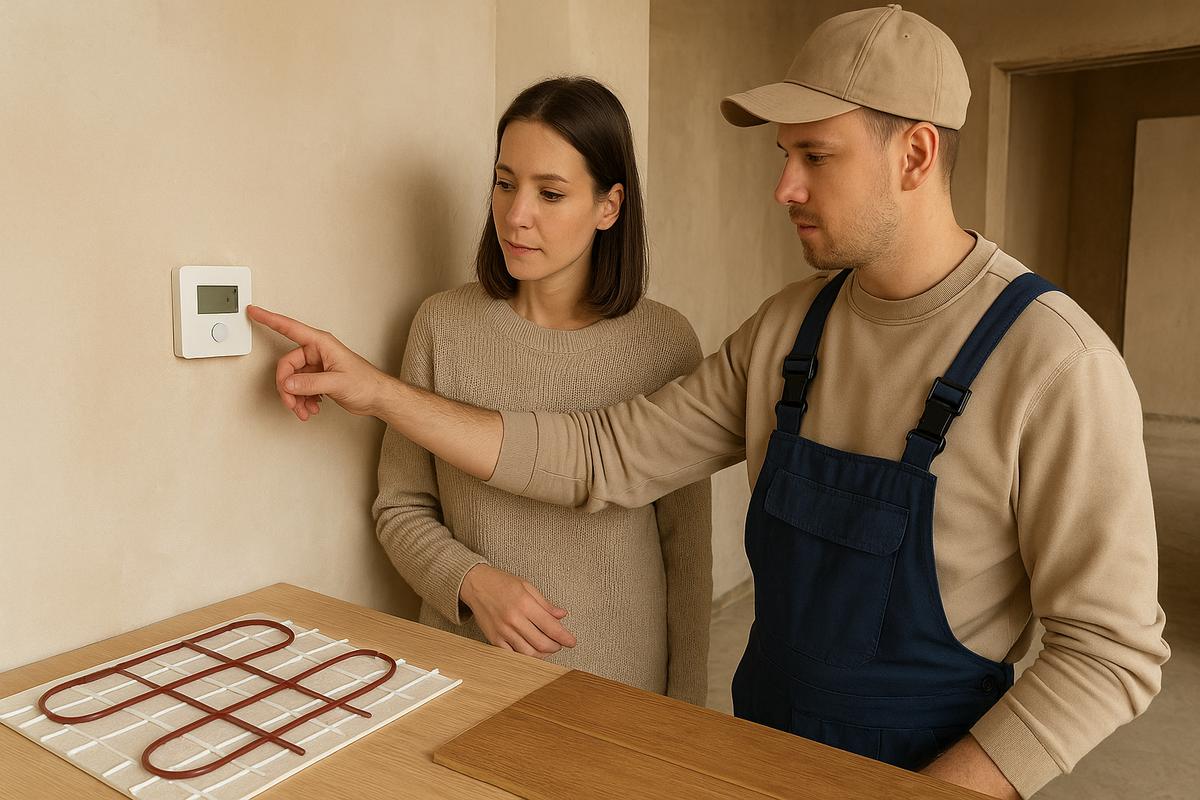
Electric Underfloor Heating: Checking Capacity and Controls
A seller says the apartment has electric underfloor heating. That might mean a small comfort-heating area in a bathroom or a system intended to heat a larger space. Buyers need to understand the layout, controls and documentation, not just the warmth felt during a viewing.
Establish where heating is installed, its intended purpose and whether the electrical installation is suitable. Ask a qualified professional to assess capacity and protection; this article is not an installation guide.
🔎 Comfort heating or primary heating?
Floor heating may improve surface comfort without being capable of heating the whole apartment. That depends on design, heat loss, installed capacity and other heat sources.
Ask how the apartment is heated in colder periods, which zones are controlled independently and how the system operates. A brief viewing test is not sufficient evidence.
Records to request
| Record or question | Purpose |
|---|---|
| Installed zone plan | Locate heating elements |
| Models and ratings | Establish purpose and power |
| Thermostats and sensors | Understand zone controls |
| Installation and test records | Identify supported information |
| Floor covering | Check compatibility with documentation |
| Electrical protection diagram | Provide to a qualified specialist |
Missing records are an uncertainty. A tile photograph cannot reconstruct exact cable locations.
⚡ Electrical capacity
Have a qualified electrician assess connected load, network condition and suitable protection for the actual system. Do not add connections or open equipment yourself.
Ask whether zones are controlled separately and what happens after a power interruption. Replacing flooring, installing fixed furniture or drilling requires checking the system plan and manufacturer instructions.
🧮 Hypothetical energy calculation
Assume a zone rated at 0.8 kW operates at full power for a total of four hours daily. Over 30 days:
0.8 × 4 × 30 = 96 kWh.
At an illustrative 0.30 currency units per kWh, energy costs 96 × 0.30 = 28.80. This is neither a current tariff nor a bill forecast.
A thermostat cycles heating on and off; actual operation depends on settings, insulation, temperature and conditions. A bill can include other components. Use current tariffs and actual system data for your own estimate.
During a viewing
Ask the seller to demonstrate controls and identify the active zone. Do not expect instantaneous warmth: response depends on the system. Stop the test and consult a specialist if there is an unusual smell or suspected fault.
Keep the zone plan, instructions, covering details, controls and service history for the new owner and future repair professionals.
Frequently asked questions
Does it always replace heating?
No. Primary-heating suitability depends on the design and apartment.
Is every floor covering compatible?
No. Check both the heating system and covering instructions.
Does the power calculation predict the exact bill?
No. It illustrates assumed operating time and excludes actual variations.
Technical information checked on 31 October 2026; a specialist should assess the individual installation. Explore the BuyHome catalogue.
Date added: 13.11.26
Related articles






Related categories

How to choose a complex
How to choose a residential complex in Georgia — key criteria affecting comfort, liquidity, and investment returns, with common mistakes explained.

How to complete a deal
How to complete a real estate purchase in Georgia — step-by-step breakdown of the process, documents, timelines, and common buyer mistakes.

Bank account opening
How to open a bank account in Georgia — requirements for foreigners, required documents, timelines, and key banking specifics.

Utilities guide
Utility bills in Georgia — overview of electricity, water, gas, internet, and building maintenance costs, with payment methods and expense calculations.
Benefits of buying property on BuyHome.ge

Best property prices
No commission for buyers
Up-to-Date Properties on the Website
Free property selection
Free transaction support
Free expert consultations

Submit a Request
for a Consultation!

2026 © All rights reserved