

BuyHome.ge
+995 595 33 78 33


Gldani for Families: Checking Everyday Routes Within the District
Gldani for Families: Checking Everyday Routes Within the District
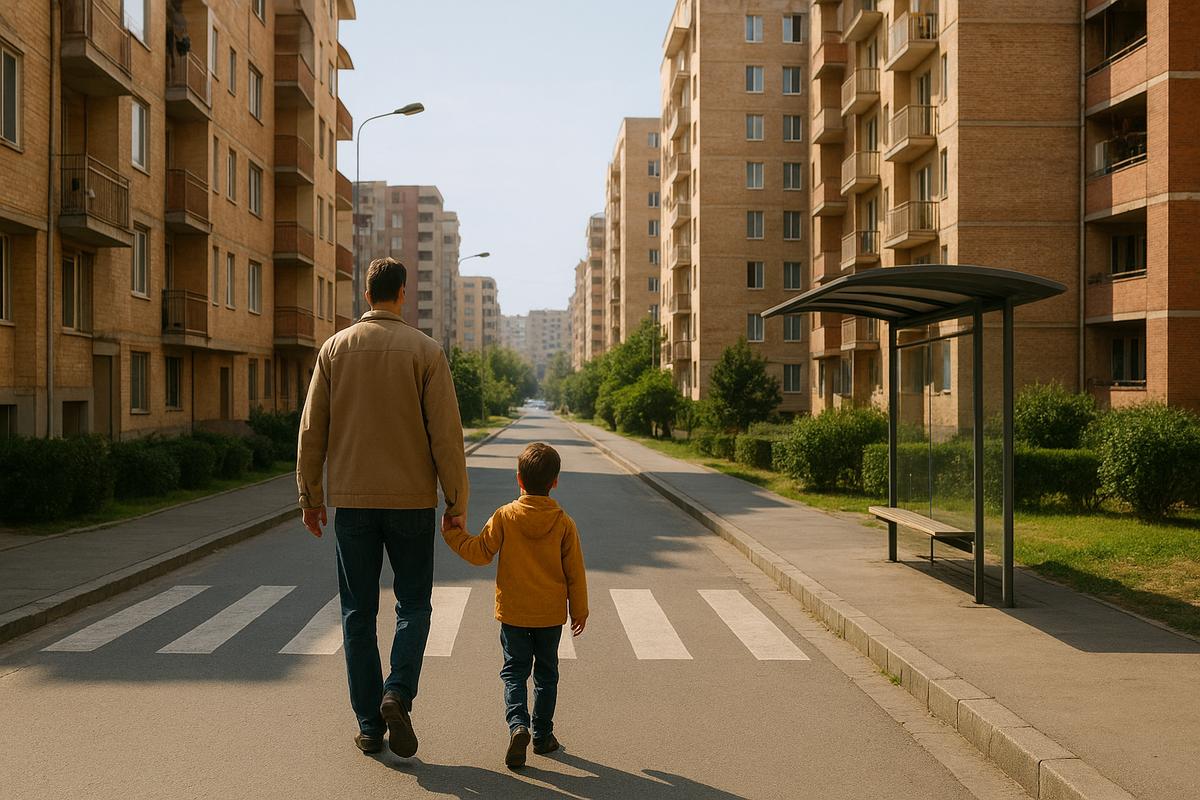
Gldani is a large district. Two listings with the same district name can give a family very different daily routes. Parents need more than proximity to a school or shop: crossings, lighting and the path from the entrance matter.
Compare individual buildings against the same family tasks and walk routes with the person accompanying the child. This assesses route access, not the quality of particular schools.
🔎 Choose the family tasks
For each apartment identify the operating entrance, school or other learning destination, shop and transport stop. Record who travels, when, whether they carry bags or accompany a child.
The nearest map marker is not automatically suitable: check the actual entrance, operating hours and available crossings.
📋 Hypothetical map of three addresses
The table is entirely fictional: A, B and C are not real buildings. Times are illustrative and do not promise a route in Gldani.
| Family task | Address A | Address B | Address C |
|---|---|---|---|
| Learning destination with an adult | 12 minutes, one crossing | 15 minutes, two crossings | 10 minutes, stairs |
| Shop | 7 minutes, lit route | 5 minutes, crossing | 9 minutes, lighting unconfirmed |
| Stop | 8 minutes, pavement | 6 minutes, narrow section | 11 minutes, pavement |
| Evening return | Checked in example | Checked in example | Lighting needs checking |
For a pushchair user, stairs at C may matter more than shorter time. A household shopping in the evening needs to check lighting. The table selects no winner and evaluates no schools.
🚶 Walk both directions
Start at the actual entrance. Check pavements, road crossings, stops and the destination’s real entrance. Walk with the accompanying adult and, where relevant, a pushchair or bags.
Consider waiting areas, visibility, surface and obstacles. Do not rely on an unofficial crossing or open neighbouring courtyard as a guaranteed route.
🌙 Two times of day
Repeat the important section at your normal morning and evening times. Check lighting along the whole route and building access. Rain may change conditions; do not test an unsafe route.
Record date and observations. A map suggests a route but does not establish the current state of every section.
Make your own table
For each home use the same three destinations: learning, shopping and transport. Add time, confirmed crossings, lighting and a backup. Mark missing information “not checked”.
Consider frequency: a small daily detour can matter more than a rare journey. The right choice depends on the household.
Frequently asked questions
Does a nearby school on a map mean an easy route?
No. Check its actual entrance and path.
Are the times real addresses?
No. All table values are hypothetical.
Should the route be checked at night?
If the family returns in the evening, lighting and access matter.
City information checked on 31 October 2026; inspect current conditions at the actual building. Explore family homes in the BuyHome catalogue.
Date added: 19.11.26
Related articles






Related categories

Moving to Batumi
Moving to Batumi: how to choose housing and an area, handle documents, navigate transport, schools and healthcare, and adapt comfortably to seaside life.

Neighborhood guides
Neighborhood guides for Batumi and Tbilisi: comparing areas for living, renting and investing, prices, infrastructure, and 2025 pros & cons.

Cost of living
Cost of living in Georgia: housing, groceries, transport, healthcare, services and utilities — real budgets, examples and hidden expenses.

Healthcare & schools
Healthcare and schools in Georgia: private vs public options, pricing, quality, insurance, choosing clinics and schools, tips for foreigners and families.

Infrastructure in Georgia
City infrastructure in Georgia: transport, roads, healthcare, schools, services and retail — how district development affects quality of life and real estate value.

Weather in Batumi
Batumi weather by months and seasons: air and sea temperatures, rainfall, humidity, and wind. What to consider for comfortable living and renting by the sea.
Benefits of buying property on BuyHome.ge

Best property prices
No commission for buyers
Up-to-Date Properties on the Website
Free property selection
Free transaction support
Free expert consultations

Submit a Request
for a Consultation!

2026 © All rights reserved