

BuyHome.ge
+995 595 33 78 33


Isani: How Crossings and Road Junctions Affect an Apartment Location
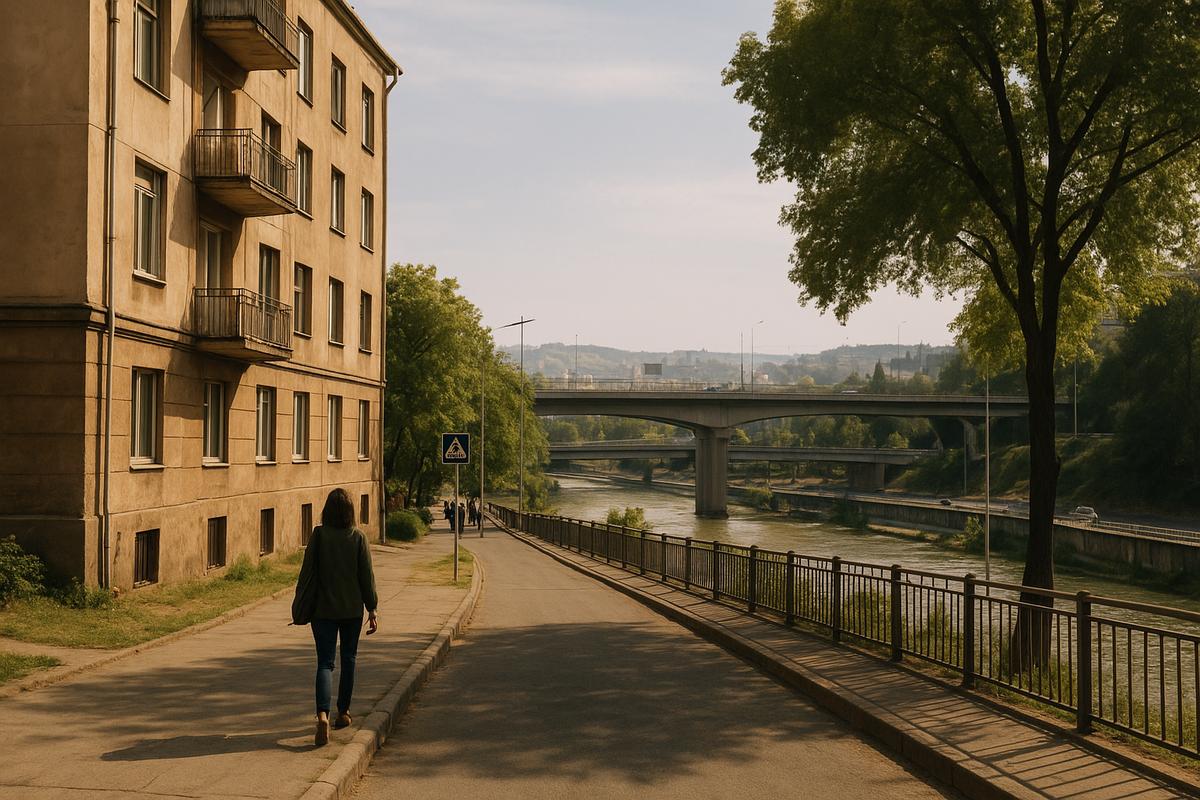
Isani: How Crossings and Road Junctions Affect an Apartment Location
Two Isani buildings can look close on a map yet offer noticeably different journeys. One entrance may connect conveniently to a crossing; another requires a detour around a fence. A car exit may initially send you in the wrong direction, while a nearby destination across the Mtkvari requires a separate bridge route.
Assess an Isani address through three journeys from your own routine and workable alternatives. A straight line does not show crossings, usable entrances, junctions or the return trip. A neighbourhood name or a view of a road does not establish convenient access to it.
🔎 Identify the exact address
Listings may use “Isani” for the administrative district, the station’s surroundings or a broader area familiar to buyers. Start with the actual building, entrance and currently operating access point.
The Mtkvari, major roads and transport junctions matter in this part of Tbilisi. Their effect depends on location: not every address requires crossing the river or using the same junction.
Identify pedestrian access and the vehicle exit separately. A marker in the middle of a development may correspond to neither.
Choose three journeys from your own life
Avoid a generic sightseeing list. Select destinations you will actually visit.
The first is regular work or study. The second is an essential everyday destination: school, shopping, a clinic or another necessary address. The third connects to another part of the city, such as relatives or regular meetings across the river, where relevant.
For each, record frequency, departure time, transport mode and constraints. Carrying shopping, travelling with a child or managing limited mobility requires a different check from an unencumbered walk.
📋 A three-journey worksheet
| Direction | Main route | Check | Alternative |
|---|---|---|---|
| Work or study | Actual entrance to actual destination entrance | Crossings, boarding, transfers and return | Another verified route |
| Everyday needs | The required destination, not merely the nearest marker | Pavement, entrance and carrying purchases | Another accessible destination |
| Another city area | Route accounting for river and road barriers | Actual barrier crossing | Different mode or route |
Complete this for the selected building. An empty alternative column signals a question to investigate, not proof that no alternative exists.
The opposite riverbank can be misleadingly close
If your destination is across the Mtkvari, use a real crossing suitable for the journey. A bank visible from the balcony is not a directly accessible continuation of the street.
Check bridge approaches on both sides, permitted travel modes and the onward route to the destination entrance. A driving route should not automatically be treated as walkable.
Use current mapping and an on-site check for the actual apartment. No invented shortcut or single bridge “for all Isani” is prescribed here: without starting and ending points, such a recommendation would be inaccurate.
A major road needs a crossing, not just a distance
A shop or stop may be opposite the building while the available crossing lies elsewhere. Trace the pavement route before and after it.
Look for stairs, barriers, driveways and closed land. Check lighting and practicality at your normal return time. If using a pushchair matters, inspect from that perspective.
Do not base the journey on an informal road crossing. Do not assume a neighbouring courtyard provides permanent access without confirmation.
🚗 Check vehicle departure and return separately
Begin at the actual garage or courtyard exit. Establish the legal direction available immediately after leaving and how to reach the required side of the road.
The return journey may differ because of traffic arrangements. An easy midday viewing trip does not establish a convenient evening commute.
Check taxi and delivery drop-off locations too. A map showing road access does not mean a driver can stop beside the intended entrance. Assess the final walking section separately.
Public transport: include the entire journey
Check current routes, stops and transfers through the city transport planner. Compare its proposal with the actual approach from the building.
Record leaving the entrance, crossing to the stop, waiting and the final section, not only time on board. The return may use the opposite side of the road and another approach.
Do not generalise one test journey to every day. Record date, time and conditions. For unusual working hours, check the options available at those times rather than assuming round-the-clock operation.
🧭 A hypothetical comparison of nearby buildings
Building A is closer in a straight line to the required shop, but its real route involves a detour to a verified crossing. Building B lies farther from the shop marker, yet its entrance connects to the appropriate side through a continuous checked route.
This example describes no actual Isani buildings and assigns no journey times or distances. It illustrates why straight-line proximity should not determine the decision.
Now add work and the third cross-city journey. A may be better for those two directions. Choose using the combination of recurring trips rather than the winner of a single comparison.
Use maps without overstating certainty
Start at the precise entrance and select walking, driving or public transport as appropriate. Examine the route section by section, especially around rivers, roads, fences and new developments.
Check current transport information and restriction notices. Satellite images and older photographs do not prove that a passage is open today.
A planner’s route is a starting point for verification, not a guarantee of every section’s condition. Confirm critical points on site. Mark uncertain access as “unconfirmed” rather than drawing an assumed connection.
Make the alternative genuinely different
If both main and backup routes use the same sole passage, its closure affects both. Mark that shared bottleneck.
A backup might be another verified route, another transport mode or an alternative everyday destination. It must fit your schedule and abilities rather than exist only theoretically.
Account for its cost and inconvenience: extra taxi use, another transfer or carrying shopping can affect the household budget. Do not assume a car will always compensate for an awkward route.
✅ Checks during a viewing visit
Allow time after inspecting the apartment to test an important route section. Where possible, repeat it at your usual departure or return time.
- Start from the operating entrance.
- Locate the real crossing and approaches.
- Confirm the destination’s actual entrance.
- Drive departure and return routes where relevant.
- Check both directions of public transport.
- Record stairs, locked gates and narrow sections.
- Verify at least one practical alternative.
You do not need to test the entire city. Focus on journeys that will recur every week.
Frequently asked questions
Does proximity to the metro mean convenient access everywhere?
No. Your journey also depends on the station approach, direction, transfers and final section.
Can I compare addresses only by car?
If you normally drive, that matters. Still assess occasions when the car is unavailable, plus drop-off and delivery access.
Does being near the river make an address worse?
Not inherently. It is irrelevant to some journeys and affects others. Assess your own destinations.
Can a neighbouring courtyard count as a route?
Only after checking access and its reliable basis. Gates open today do not guarantee an ongoing right of passage.
Turn this into a search criterion
Replace “a good neighbourhood” with three verified journeys, an acceptable return and a workable backup. That brief allows meaningful comparisons between buildings.
City and transport information checked on 31 October 2026; access and traffic arrangements need current address-specific verification.
Explore options in the BuyHome catalogue. Share your recurring Tbilisi destinations so Isani can be assessed through actual routes rather than a map marker.
Date added: 09.11.26
Related articles






Related categories

Moving to Batumi
Moving to Batumi: how to choose housing and an area, handle documents, navigate transport, schools and healthcare, and adapt comfortably to seaside life.

Neighborhood guides
Neighborhood guides for Batumi and Tbilisi: comparing areas for living, renting and investing, prices, infrastructure, and 2025 pros & cons.

Cost of living
Cost of living in Georgia: housing, groceries, transport, healthcare, services and utilities — real budgets, examples and hidden expenses.

Healthcare & schools
Healthcare and schools in Georgia: private vs public options, pricing, quality, insurance, choosing clinics and schools, tips for foreigners and families.

Infrastructure in Georgia
City infrastructure in Georgia: transport, roads, healthcare, schools, services and retail — how district development affects quality of life and real estate value.

Weather in Batumi
Batumi weather by months and seasons: air and sea temperatures, rainfall, humidity, and wind. What to consider for comfortable living and renting by the sea.
Benefits of buying property on BuyHome.ge

Best property prices
No commission for buyers
Up-to-Date Properties on the Website
Free property selection
Free transaction support
Free expert consultations

Submit a Request
for a Consultation!

2026 © All rights reserved