

BuyHome.ge
+995 595 33 78 33


Private House Water and Wastewater: Checking Off-Grid Systems Before Buying
Private House Water and Wastewater: Checking Off-Grid Systems Before Buying
A beautiful garden and fresh interior do not tell you where a private house gets its water or where wastewater goes. One property may use central networks; another may have a well, storage tank or on-site treatment; mixed arrangements also exist. Before buying, establish the actual setup and obtain specialist assessments rather than relying on “everything works.”
🚰 Map the water and wastewater routes
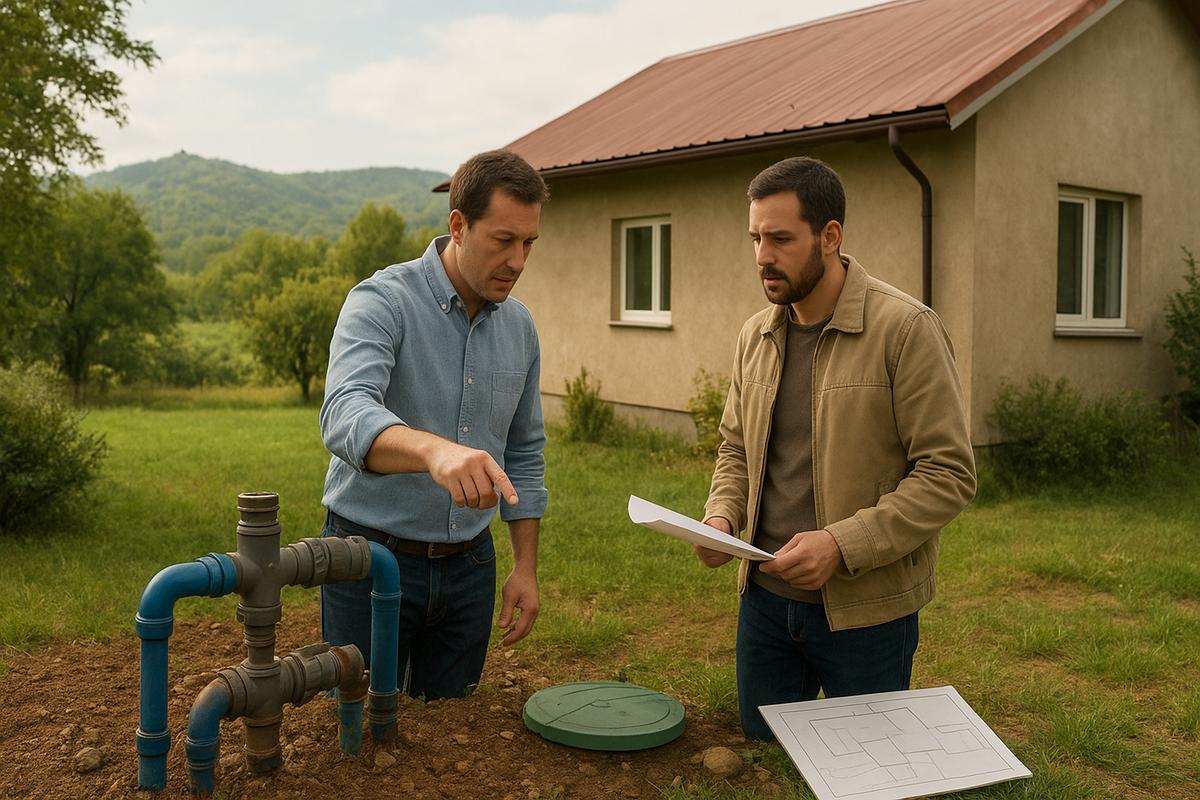
Ask the seller to show the equipment and explain the route from source to taps and from the house to wastewater collection or treatment. Include in a preliminary diagram:
- water source: central supply, well, borehole or another arrangement;
- pump, filters, storage and backup power, if present;
- all buildings and points of use connected;
- wastewater: central connection, holding tank or on-site treatment;
- known pipes, access covers, service areas and vehicle access.
Do not assume every component is within the plot or owned by the seller. If neighbours share a system, clarify usage rights, allocation of expenses and access arrangements.
🔎 Documents and maintenance history
Request whatever exists for this property: connection and payment information, plans, equipment manuals, water tests, inspection and pumping records, service agreements and documents for shared systems. A missing document does not automatically mean a defect or violation, but limits verification and may call for further checks.
Ask who installed the equipment, when it was serviced, whether interruptions occur, what happens during a power outage and how supply changes in a dry period or under heavy use. Check answers against records and inspection. With a lawyer and the relevant local authority or operator, clarify applicable rights, approvals and obligations; there is no reliable universal permit list without knowing the system.
💧 How to assess the water
Observe pressure and simultaneous use at several points, but do not treat a short test as proof of adequate year-round yield. A water specialist can assess equipment, leaks, performance and storage, and recommend testing appropriate to the season and household.
Clear, odourless and pleasant-tasting water is not proof that it is safe to drink. Contact a competent laboratory to discuss the source, possible risks, test parameters, sampling procedure and interpretation. Ask whether separate samples are needed before and after filtration. One test describes the sample and conditions at collection; discuss future testing with specialists.
Check when filters were changed and who services them. Do not assume any household filter removes every possible contaminant.
♻️ How to assess wastewater
A holding tank and a treatment system work differently. Establish the type, actual layout and servicing arrangements. Ask for pumping frequency and cost from records or a local provider, access for the service vehicle and usage restrictions. Costs depend on the property and service conditions.
Slow drains, wet ground, overflow marks or odours warrant professional inspection, although their absence does not guarantee proper operation. A specialist should assess accessible components and whether further diagnostics are needed.
Do not open, inspect or enter tanks yourself: confined spaces may contain dangerous gases. Work should be performed by trained specialists with suitable equipment.
📋 Checklist before deciding
| Check | What to obtain | If unavailable |
|---|---|---|
| Water source and connection | Plan, available documents and service description | Ask seller and specialist |
| Water quality | Laboratory results for selected parameters | Arrange proper sampling and analysis |
| Pump, filter and backup | Inspection, manuals and service history | Commission an operational assessment |
| Wastewater | Layout, system type and maintenance history | Engage a qualified specialist |
| Shared components | Use rights, costs and access | Clarify with parties and lawyer |
If further inspection is needed, agree access with the seller before completing the transaction. Include potential maintenance and repairs in the budget after a specific assessment, and keep a reserve for unknowns.
Information checked on 31 October 2026; confirm property-specific conditions with the relevant professionals and parties.
❓ Frequently asked questions
Can smell establish whether water is drinkable? No. Laboratory analysis needs to address parameters appropriate to the source and risks.
If there is no odour, is the wastewater system sound? No. The absence of smell does not replace inspection and service records.
Does a well mean complete independence? Not necessarily: a pump may depend on electricity and the source on seasonal conditions. Check backup and actual performance.
Find a private house in Georgia with BuyHome, and arrange checks for the systems actually installed before buying.
Date added: 23.11.26
Related articles






Related categories

How to choose real estate in Batumi
How to choose real estate in Batumi: location, property type, new build vs resale, document checks, and practical tips for a safe purchase.

Real estate prices and market in Batumi
Property prices in Batumi: price per m², location comparisons, new builds vs resale, market trends and 2025 forecasts.

Where to buy in Batumi
Location guide for Batumi: where it’s best to live, where rental demand is higher, and what drives property prices.

Property types in Batumi
A guide to Batumi property types: studios, serviced apartments, apartments, penthouses and houses — pros, cons, pricing and liquidity.

New builds and residential complexes in Batumi
The best new builds and residential complexes in Batumi: how to choose a developer, compare projects, evaluate amenities and buying risks.

Buying property in Batumi: documents and deals
Practical guidance for buying property in Batumi: documents, property checks, key points for foreigners and closing costs.
Benefits of buying property on BuyHome.ge

Best property prices
No commission for buyers
Up-to-Date Properties on the Website
Free property selection
Free transaction support
Free expert consultations

Submit a Request
for a Consultation!

2026 © All rights reserved