

BuyHome.ge
+995 595 33 78 33


Remote Management: What’s Easier to Control—Complex or House
Remote Management: What’s Easier to Control—Complex or House
Remote management: apartment complex or house — quick overview 🏢🏠
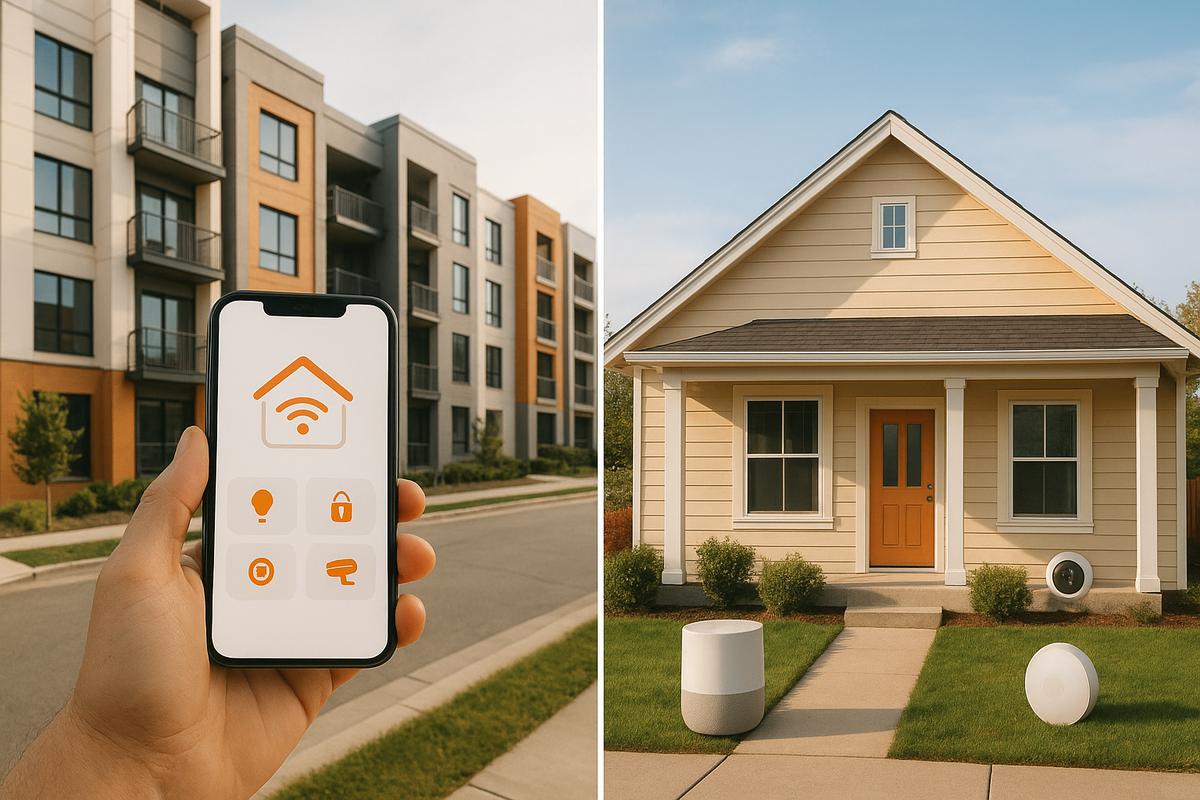
Remote property management covers more than smart devices. It includes security, emergency response, routine maintenance and how easily you can monitor and fix issues from afar. Let's compare apartment complexes (with management companies) and standalone houses from a remote-control perspective.
Core difference: centralized systems vs individual control 🔄
- Apartment complex: centralized services — security, shared surveillance, dispatch services and bundled utilities. One contact often handles many problems.
- House: fully individual systems and contractors. More flexibility, but more responsibility for coordination and emergency support.
Advantages of apartment complexes for remote oversight ✅
1. Centralized services
A management company usually handles routine checks, emergency responses and common-area maintenance. For remote owners this reduces daily hassles: file a ticket and the team acts.
2. Built-in remote tools
Many modern complexes offer resident portals, apps for service requests and camera access for common areas — useful for owners who aren’t on site.
3. Simplified billing and accountability
Shared billing and one point of contact make it easier to track ongoing costs and avoid chasing multiple vendors.
Advantages of a detached house for remote control ✅
1. Complete control over systems
In your own house you decide on the alarm, backup power, heating logic or water systems. This is ideal if you need custom automation.
2. Choice of contractors
You can build long-term relationships with local technicians and tailor maintenance contracts to your needs.
3. Greater privacy
No shared corridors or communal access means fewer points of external interference and clearer responsibility lines.
Risks to consider when managing remotely ⚠️
- Internet and power dependence: smart systems need reliable connectivity and redundancy.
- Contractor availability: houses require a trusted on-call network for fast fixes.
- Governance in complexes: shared decisions can slow down changes to common areas.
- Neighbor behavior: in apartments, common systems can be affected by others’ actions.
Practical steps to set up reliable remote management 🛠️📱
- Start with basic sensors: leak detectors, smoke alarms and door/window sensors are cost-effective and informative.
- Use cloud-backed video surveillance with secure access and off-site backups.
- Create automated responses: shut off water on leak detection, lights on motion, staged heating schedules.
- For complexes, clarify SLA with the management company: response times, emergency priorities and responsibilities.
- For houses, maintain a vetted list of local technicians and contracts for rapid response.
- Schedule seasonal checks for generators, pumps and batteries.
How this affects ownership costs and rental potential 💸
Remote management can increase an asset’s attractiveness to renters and reduce vacancy-related risks. In complexes, savings come from centralized services; in houses, from automation and reliable contractors. Choose based on whether you value time-saving convenience or full operational control.
Example scenarios
- Frequent traveler or remote investor: a well-managed complex reduces touchpoints and stress.
- Owner seeking bespoke control over systems: a house allows advanced custom automation and independent backups.
Quick pre-purchase checklist ✅
- Does the complex have a digital resident portal and remote monitoring tools?
- How fast is the emergency response in the building or area?
- Which basic sensors can you install or integrate remotely?
- Do you have reliable local technicians available for on-site issues?
Conclusion and next steps 🤝
Remote management is about systems and service: if you prefer minimal operational involvement, a managed apartment complex is often simpler. If you want flexibility and full control, a private house can offer more — with the caveat that it needs a structured maintenance approach.
If you’re choosing a property and want advice on how ready a specific apartment or house is for remote control, contact BuyHome — we can help you evaluate options and find the best match: https://buyhome.ge/en/search
Date added: 07.08.26
Related articles



Related categories

White vs black frame
White vs black frame in Georgia: what’s included, which renovation stages you’ll face, real-world cost differences, and which option is better for your budget and timeline.

Batumi vs Tbilisi
Batumi vs Tbilisi for property buyers: prices, neighborhoods, infrastructure, rental demand, and growth outlook. A clear guide to choose the right city for your goals—sea lifestyle or capital-city investing.

New vs resale
Primary vs resale property in Georgia: prices, condition, move-in timelines, deal risks, and real returns. A clear guide to choose the best option for living, renting, or investing.

Complex vs house
A practical comparison of residential complexes vs private houses in Georgia—costs, risks, rental income, and resale liquidity to choose the right format.
Benefits of buying property on BuyHome.ge

Best property prices
No commission for buyers
Up-to-Date Properties on the Website
Free property selection
Free transaction support
Free expert consultations

Submit a Request
for a Consultation!

2026 © All rights reserved