

BuyHome.ge
+995 595 33 78 33


Saburtalo Apartments: Checking the Real Walk to the Metro
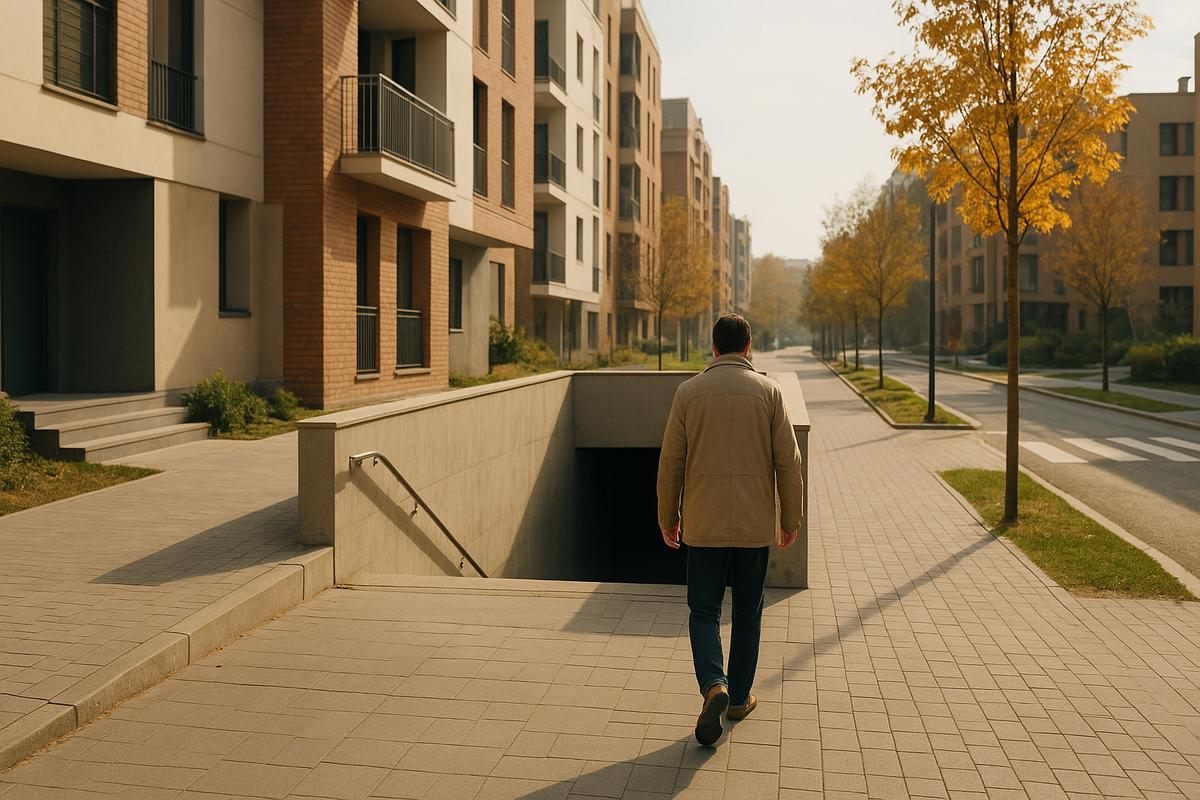
Saburtalo Apartments: Checking the Real Walk to the Metro
“Five minutes to the metro” can be a persuasive line in a Saburtalo apartment listing. But a map distance, the walk from the building entrance to the station entrance, and the complete journey to the platform are different measurements. A short route may involve an awkward crossing or stairs, while a slightly longer one may feel easier and more predictable.
Check the journey you would make each day, rather than the distance to a metro symbol. A consistent method makes it easier to compare actual apartments without relying on promotional walking times.
📍 Define the beginning and end
Ask what the advertised time includes: the edge of the complex, its main gate or your actual building entrance. These can be different places. Crossing a courtyard, leaving a gated area and walking around another block all take time.
Use the same boundaries for each property:
- The building entrance to an operating station entrance.
- The station entrance to the platform you need.
- Train waiting time, recorded separately from walking distance.
- If relevant, the onward journey and interchange to your destination.
If door-to-work time matters, include the lift and the route out of your apartment building. Keep that total distinct from the phrase “walk to the metro”. A fair comparison requires matching measurements.
Route to a real entrance
Do not draw the route to the middle of a station label on a map. Identify the entrance you could actually use and inspect its approach. A convenient-looking path may cross private land or depend on restricted access.
Check official city transport resources for the current network and service notices. The Tbilisi Transport Company services provide a starting point for planning, but the individual approach still needs an on-site check before buying.
Do not count a promised future entrance, an unopened passage or a shortcut through somebody else's parking area as an established advantage. Until access is confirmed, treat it as a separate uncertain scenario.
Walk at your normal pace
Make the first trip without rushing to match the listing. Use the pace you would normally maintain with a work bag or groceries. Start the timer at the chosen building door and stop it at the station entrance.
Record traffic-light waits separately. Catching a green signal once does not mean that every trip will be equally quick. Walk back too: a slope that felt insignificant downhill may change your assessment on the return.
Where possible, include the person who will use the route. Your own fast walk does not establish that stairs or gradients suit another member of the household. With a pushchair or suitcase, assess only a safe, permitted route; do not test shortcuts through traffic.
Crossings can matter more than metres
Look at how roads are crossed, not simply how many roads appear on the map. Where do you wait? Can you complete the crossing comfortably? Is there an alternative if one section closes?
Inspect:
- the actual position of controlled crossings;
- stairs and gaps in the pavement;
- driveways and parking entrances;
- places where parked cars obstruct the pedestrian route;
- narrow sections where passing another person is difficult;
- detours required to reach a safe crossing.
Do not shorten the trip by breaking road rules or treating a risky dash across traffic as an ordinary part of the journey. If the advertised time depends on doing that, it is not a useful figure for your comparison.
Gradients, rain and evening lighting
Equal distances can involve unequal effort. Note uphill sections, long stairs and places without a convenient stopping point. Map information may help you prepare, but the final assessment should follow a walk.
Schedule a second visit at another time, such as a normal weekday evening. Check working lights, crossing visibility and access through passages. If you see damaged paving or a place where water collects, investigate its condition after rain without exposing yourself to dangerous weather.
One sunny visit does not establish year-round comfort. Equally, a temporarily closed pavement is not automatically a permanent defect. Establish the reason, who is responsible for the work and whether a usable alternative exists. “It will reopen soon” is not confirmation.
📋 Three hypothetical routes of equal length
The following is a teaching example, not a survey of Saburtalo streets. Assume each route measures 600 metres from the building entrance to the station entrance.
| Route | Conditions | Illustrative time | Further check |
|---|---|---|---|
| A | Mostly level pavement, one crossing | 9 minutes | Evening traffic-light wait |
| B | Uphill section and stairs | 12 minutes | Return trip carrying a bag |
| C | Passage through a gated area | 8 minutes with the gate open | Access rights and the closed-gate detour |
These figures are not walking-speed standards or predictions of your performance. They show why equal distance need not mean equal convenience. Route C cannot be called the best while access depends on an unverified gate.
Compare repeatability as well as your quickest result. A clear route with a small time allowance may be more useful for daily travel than a shorter passage that is sometimes unavailable.
Record two visits consistently
Keep a separate record for each property and complete it immediately. Similar courtyards and crossings are easy to confuse later.
| Item | First walk | Repeat walk |
|---|---|---|
| Date, time and weather | Record | Record |
| Building door and station entrance | Identify precisely | Confirm the same points |
| Time to station entrance | Actual result | Actual result |
| Entrance-to-platform route | Separate observation | Repeat assessment |
| Crossings and waiting | Note | Compare |
| Stairs, slopes and narrow sections | Mark | Recheck |
| Closures and alternative route | Describe | Confirm access |
| Personal effort | Describe in words | Describe in words |
Do not retain only an average time. A note such as “the final crossing felt awkward after dark” can explain more than a precise number because it identifies the cause of the difference.
A convenient station is only part of the commute
After checking the walk, consider the direction you need to travel. A nearby entrance does not remove an interchange or a long walk at the other end. Someone working remotely and using the metro weekly may reasonably have different priorities from a daily commuter.
You do not need to investigate the entire transport network. Test two or three regular journeys: work, education and important family trips. Consider an alternative when the metro is temporarily unavailable, whether a suitable bus, taxi or a different travel time. Check current schedules and costs when making the decision.
When is an easier walk worth paying for?
There is no universal percentage premium for metro proximity. Compare otherwise similar apartments and consider your travel frequency, tolerance of slopes and need to return after dark.
Paying more may make sense when it buys verified everyday convenience: a straightforward exit, a safe crossing and a route available at the times you need. If the advantage exists only on a map, confirm it before using it to justify the price.
Keep essential requirements for the apartment itself in view. An excellent walk cannot resolve an unsuitable layout or unanswered document questions.
Frequently asked questions
Can I rely on an app's walking time?
Use it for an initial estimate. Your pace, crossing delays and the exact entrance need separate checks.
Is one walk sufficient?
It is useful, but it does not demonstrate evening lighting or repeated access. Two visits under different conditions provide a stronger comparison.
Is the nearest station always the best choice?
No. The approach, onward journey and your own requirements matter. A slightly longer but simpler walk can be more suitable.
✅ Before buying in Saburtalo
Fix the route's endpoints, walk it in both directions and repeat the assessment at another time. Separate confirmed convenience from future promises. “Near the metro” can then become a specific selection criterion rather than a vague selling point.
Start with Tbilisi apartments in BuyHome's property search. Tell us where and how often you travel so the shortlist reflects your actual route rather than the same phrase repeated in listings.
Date added: 01.11.26
Related articles






Related categories

Moving to Batumi
Moving to Batumi: how to choose housing and an area, handle documents, navigate transport, schools and healthcare, and adapt comfortably to seaside life.

Neighborhood guides
Neighborhood guides for Batumi and Tbilisi: comparing areas for living, renting and investing, prices, infrastructure, and 2025 pros & cons.

Cost of living
Cost of living in Georgia: housing, groceries, transport, healthcare, services and utilities — real budgets, examples and hidden expenses.

Healthcare & schools
Healthcare and schools in Georgia: private vs public options, pricing, quality, insurance, choosing clinics and schools, tips for foreigners and families.

Infrastructure in Georgia
City infrastructure in Georgia: transport, roads, healthcare, schools, services and retail — how district development affects quality of life and real estate value.

Weather in Batumi
Batumi weather by months and seasons: air and sea temperatures, rainfall, humidity, and wind. What to consider for comfortable living and renting by the sea.
Benefits of buying property on BuyHome.ge

Best property prices
No commission for buyers
Up-to-Date Properties on the Website
Free property selection
Free transaction support
Free expert consultations

Submit a Request
for a Consultation!

2026 © All rights reserved