

BuyHome.ge
+995 595 33 78 33


Insuring a Seaside Apartment in Georgia: Policy Exclusions to Check
Insuring a Seaside Apartment in Georgia: Policy Exclusions to Check
A seaside apartment may be occupied all year, used only for holidays or rented out. These are different starting points for insurance. A headline promising “home protection” does not establish which losses are covered, what is excluded or what the owner must do.
Choose a policy against your actual loss scenarios and contract terms, not only its price and headline sum insured. For a Batumi apartment, examine water damage, persistent damp, liability to neighbours and periods when nobody stays at the property.
Describe how the apartment is used
Prepare the address, condition, area, intended use, occupants, rental arrangements, length of owner absence and who checks the property.
Disclose renovation work, known damage and relevant property characteristics. Do not present a rented apartment as a permanently occupied private home to obtain a convenient price. A mismatch between declared and actual circumstances may create problems when an event is assessed.
If use changes after the policy starts, ask how to notify the insurer. Examples include beginning to rent or arranging a long absence. Obtain a response for your contract rather than relying on a product advertisement.
Separate four subjects of protection
- Structure: the building or apartment elements defined in the wording.
- Finishes: the included wall, floor and fitted elements.
- Contents: furniture, appliances and other selected categories.
- Liability: obligations to other people in the circumstances specified.
Cover for your own finishes should not automatically be treated as cover for damage to neighbours. A large structural limit does not establish an equivalent limit for appliances.
Ask where each insured category, amount and set of perils appears in the proposal. If something is absent or unclear, clarify it before payment.
Water: identify the source and mechanism
Everyday language may call several events “flooding”: a burst pipe, water from upstairs, entry through a window, a shared-system failure or a natural event. The policy's definitions matter.
Ask the insurer to consider your scenarios individually:
- failure of a pipe inside the apartment;
- water from an upstairs property;
- failure of a shared riser;
- rain entering an open window;
- a repeat leak after previous damage;
- water from a terrace or construction defect.
Do not ask only whether water is covered. Request the applicable cover, exclusion, limit and required action for each case. A general “yes” is not a substitute for the wording.
Damp, mould and gradual deterioration
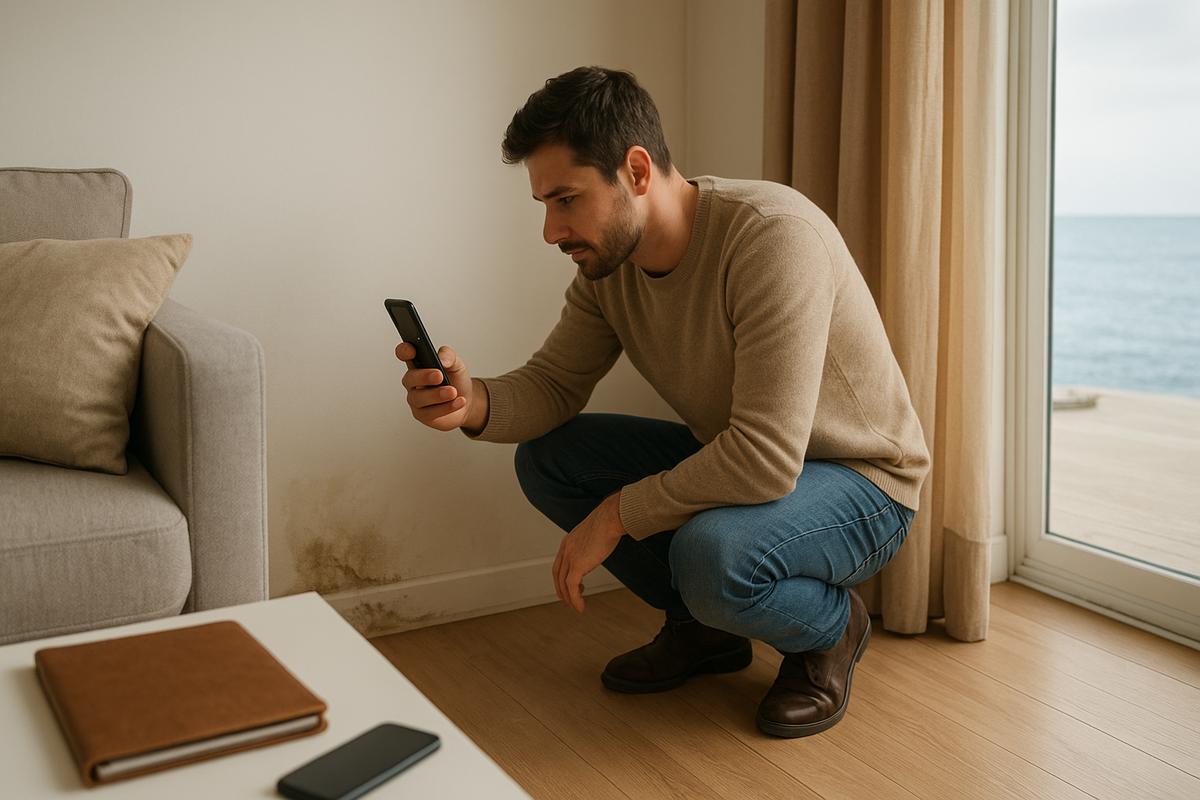
A stain can be discovered suddenly even if its cause developed over time. Separate the time of discovery from the process that caused the damage.
Ask how the contract deals with ongoing humidity, condensation, mould, wear, maintenance shortcomings and construction defects. Do not assume all are covered or all excluded; the wording and circumstances determine the answer.
Document existing moisture signs and obtain a technical assessment of the cause. Insurance is not a replacement for correcting an already known problem.
Ask how the policy treats repeated damage from the same cause: whether previous repairs must be evidenced and which documents are accepted.
If the owner leaves for several months
For a holiday apartment, absence provisions can be central. Check how the policy defines absence, supervision and the permitted duration.
Ask how long the property may remain unattended, how the contract defines supervision and whether an extended absence needs separate agreement.
Do not assume that an occasional visit by a friend meets the policy's supervision requirements; obtain written clarification.
Ask in writing:
- how supervision is defined;
- whether visits by a trusted person count;
- what evidence is required;
- whether different arrangements can be agreed;
- which systems must remain operational;
- whether long absences must be notified.
If you cannot meet the conditions, seek suitable terms rather than relying on an informal assurance.
What changes when the apartment is rented?
Describe the real arrangement: long-term tenants, short visits or a mixture of personal use and renting. Clarify who monitors the condition and how the policyholder learns about an incident.
Tenant-caused damage, the owner's liability towards occupants and lost rent following an insured event are distinct concerns.
Ask which rental-related risks are included in the basic policy, which require additional cover and which are excluded. Check the limits and conditions of each selected cover.
Do not tell a tenant that insurance removes every responsibility. The relationship between the policy and lease needs separate clarification.
Excesses, limits and reinstatement value
The sum insured is not a promise to pay that amount for every incident. Coverage and conditions are considered first, then the applicable limit, excess and calculation method.
Check whether there are separate limits for water, appliances or liability; how the excess operates; whether a limit applies per event or over the policy period; whether depreciation is considered; how restoration cost is determined; and what happens if the declared value is insufficient.
Two policies with the same large headline limit may respond differently to your most important scenario.
A fictional comparison
The following terms are invented for teaching, not insurer quotations. Assume an eligible loss of GEL 8,000 and, in both examples, a stated rule deducting the excess after applying the relevant limit.
| Item | Fictional policy A | Fictional policy B |
|---|---|---|
| Relevant loss limit | GEL 5,000 | GEL 10,000 |
| Example excess | GEL 500 | GEL 1,000 |
| Calculation under the assumed rule | 5,000 − 500 | 8,000 − 1,000 |
| Illustrative result | GEL 4,500 | GEL 7,000 |
An actual contract may use a different method. An excluded event does not become covered through arithmetic. The example compares mechanics rather than predicts a payment.
Prepare evidence of contents in advance
List significant items: category, model, serial number where available, condition, value reference and available purchase evidence. Keep photographs of the apartment and contents separately and accessibly.
Ask what evidence is accepted for older appliances or items without receipts. Do not assume photographs alone are sufficient, but do not assume a missing original receipt automatically means rejection without checking the terms.
Clarify special limits for valuables, expensive equipment and items on a balcony or outside the enclosed premises. A broad reference to household belongings may not resolve those categories.
Understand your duties after an incident
Before anything happens, identify the notification channel and deadlines, required evidence, inspection arrangements and rules on repairs.
During an incident, prioritise people's safety and contact appropriate services when necessary. Take available safe steps to prevent further damage without interfering with dangerous systems yourself.
Record the circumstances and contact the insurer. Before disposing of damaged items or completing repairs, clarify evidence-preservation requirements. Document necessary urgent work and why it could not wait. Safety must not be delayed for photographs or an inspection.
Do not make inaccurate statements about timing, cause or value. If the circumstances remain unknown, say so.
Compare two actual proposals consistently
Give both insurers the same property description and ask the same questions.
| Question | What to record |
|---|---|
| Water | Peril definitions, exclusions and sub-limits |
| Damp and defects | The clause and its application to your apartment |
| Unoccupied property | Period, supervision definition and agreed exceptions |
| Renting | Permitted use and selected additional cover |
| Contents | Categories, amounts, valuation and evidence |
| Neighbours | Whether liability cover exists and its scope |
| Incidents | Notification, inspection and documents |
Where answers differ, request the relevant clause. Keep the schedule, wording, annexes and agreed changes together. A marketing screenshot is not the complete contract.
Frequently asked questions
Will insurance pay for any mould?
The product name cannot establish that. The cause, circumstances, cover and exclusions must be assessed.
Is mortgage insurance enough?
Check the selected categories, parties and protection. A bank's requirement and your own protection needs may differ.
Can the apartment be empty all winter?
Property use and insurance conditions are separate matters. Ensure the contract reflects the actual absence pattern.
Is the cheapest policy necessarily poor value?
No. Compare suitable cover, limitations and your requirements. Price alone does not establish adequacy or quality.
Where to begin
Describe actual use, select important scenarios and request written proposals with the full terms. Insurance should complement maintenance, correction of defects and a workable trusted-person arrangement.
If you are still selecting a home, browse BuyHome properties. We can help identify a property for your ownership plans; agree insurance cover and payment terms separately with the insurer.
Date added: 01.11.26
Related articles



Related categories

Taxes and fees (purchase and rental)
Guide to taxes and costs for buying and renting property in Georgia: registration and related fees, rental income tax, exemptions, payment deadlines, and practical calculation examples.

Real estate legislation in Georgia
Key rules of Georgian real estate law: ownership rights, public registry registration, purchase and rental transactions, key restrictions, and practical guidance for residents and foreigners.

Developer contracts
A practical guide to developer contracts in Georgia: instalment plans and payment schedules, completion timelines, warranties, penalties, and termination terms. What to review before signing and how to reduce buyer risks.

Transaction risks and security
Seller and property due diligence in Georgia: registries, documents, encumbrances, and key risks. What to verify before the deal to protect yourself and buy with confidence.
Benefits of buying property on BuyHome.ge

Best property prices
No commission for buyers
Up-to-Date Properties on the Website
Free property selection
Free transaction support
Free expert consultations

Submit a Request
for a Consultation!

2026 © All rights reserved