

BuyHome.ge
+995 595 33 78 33


Basement-Level Apartments: Documents, Daylight and Ventilation
Basement-Level Apartments: Documents, Daylight and Ventilation
A listing describes a basement-level apartment with fresh finishes, a kitchen and a bed. Those features do not establish what is being sold, whether intended occupation matches its documentation or whether daily life there will suit you.
Separate its position relative to the ground, its documented status and actual conditions of use. Lower-ground properties differ. Neither a lower price nor attractive finishes replaces the checks.
🏡 Establish the actual level
Inspect outside from all accessible sides. Where are the floor and windows relative to the ground? A hillside building can look different from the entrance and the opposite façade.
Record observations without assigning a legal classification yourself: windows above the pavement, openings into a lightwell or stairs descending to the entrance. “Floor zero” is not a precise description.
Compare the observations with plans and official characteristics. Where the seller uses different labels, establish whether they describe the same property.
Check status before discussing furniture
Obtain current ownership information, the cadastral code and available plans. Establish the premises' designated use and documentary basis for their present condition.
Residential decoration does not itself establish permission to use a space as a dwelling. Equally, being below part of the surrounding ground does not justify declaring the property unlawful without assessment.
For conversion or alterations, request the relevant documents. A lawyer and designer should establish applicable requirements, whether actual conditions match the records and what your intended use needs.
“People already live here” does not establish the status of your unit or demonstrate completion of the required procedure.
See BuyHome's property-document guide for the broader checks. The additional task here is connecting the documented use, actual level and proposed occupation.
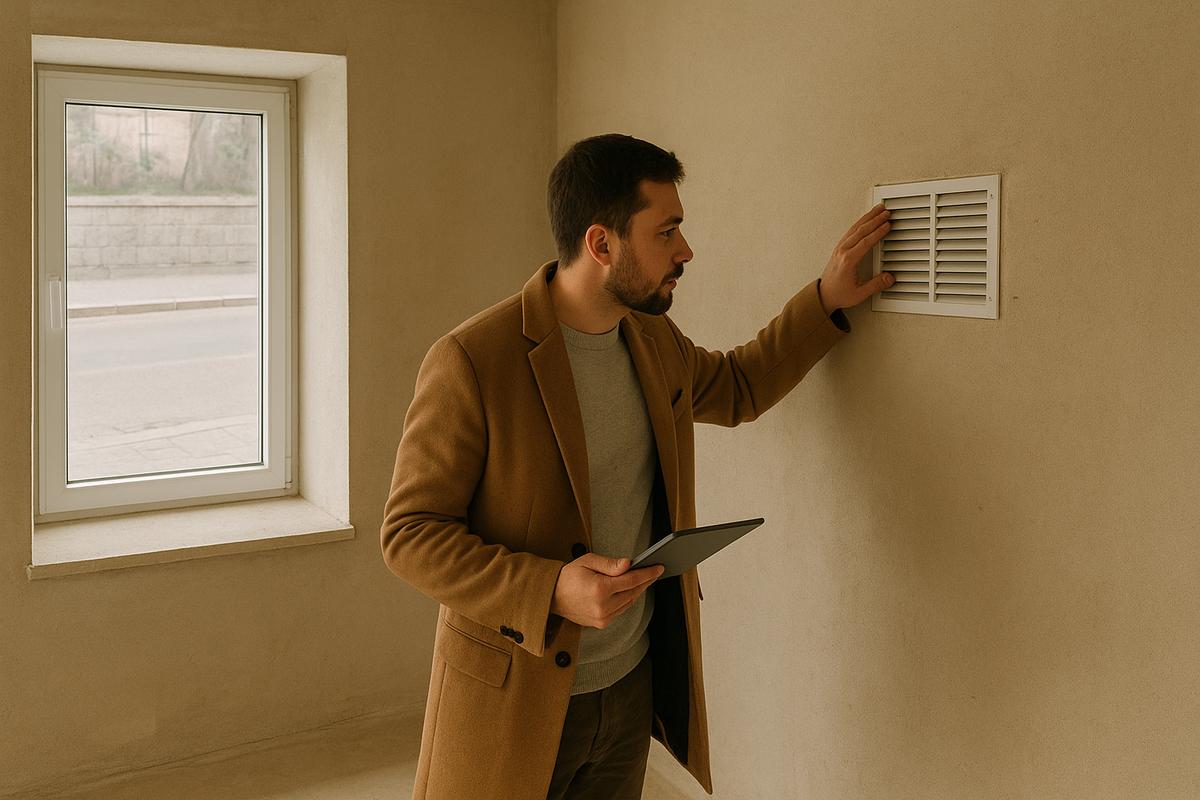
Test daylight where you will use the room
Visit during daylight and ask for ordinary artificial lighting to be switched off temporarily where safe. Record which areas receive daylight, window positions and immediate obstructions.
Opening size is not the only factor. A nearby wall, canopy, lightwell or high pavement can affect the room. Do not assess a future desk solely by standing beside the glass.
Mark intended sleeping, working, cooking and circulation positions. Decide whether their lighting suits you. Any compliance assessment must follow the applicable requirements and method, not a listing photograph.
Constant bright artificial lighting is a separate practical and running-cost characteristic, not proof of good daylight.
An opening window is not a complete ventilation assessment
Establish the normal supply and removal of air. Have a specialist assess existing systems, particularly where partitions create rooms distant from external windows.
Identify duct destinations, maintenance responsibility and equipment that must operate. A grille or audible fan does not establish suitability on its own.
Consider ordinary closed-window use without disabling required systems yourself. If comfort depends on a permanently open window at pedestrian level, record that as a separate restriction.
Do not assume one dehumidifier or air conditioner solves every issue. Establish the cause and an evidenced technical solution first.
Investigate water marks and their source
Inspect accessible floor-wall junctions, window areas, entrances and services. Record damp smells, staining, peeling finishes and previous repair marks.
Fresh decoration proves neither a hidden fault nor its absence. Ask for leakage history and completed works. Where needed, arrange an inspection with clearly stated limits.
Establish drainage around windows and the entrance, responsibility for external elements and what happens following rain. Ask about the operation, power and maintenance of any pumps or related equipment.
A dry visit alone does not demonstrate reliable drainage. Repeat after rainfall where safe. A specialist should assess causes and adequacy of protection.
Entrance, exits and everyday movement
Walk from the street to the unit and back. Assess stairs, doors, thresholds, lighting and clear passages. Could you bring groceries, a pushchair or furniture through normally?
Have applicable exit and safety requirements checked for the intended use. A small window is not automatically a suitable alternative exit, and foreign requirements should not be applied indiscriminately.
Determine whether access depends on a common space with restricted hours. The whole route matters, including servicing and emergency access.
📋 Organise legal and technical checks
| Question | Relevant assistance | Useful outcome |
|---|---|---|
| Status and rights | Lawyer | Comparison of records, documents and purchase purpose |
| Altered layout | Lawyer and designer | Necessary basis and unresolved matters |
| Light and air | Relevant specialist | Assessment of actual conditions and required solutions |
| Water and structure | Technical specialist | Observations, investigation needs and limitations |
| Exits and access | Relevant requirements specialist | Review for intended occupation |
| Maintained systems | Management and technical specialist | Responsibilities, operation and access |
Distinguish a visual visit from investigation of concealed areas. A report should not imply inspection where access was unavailable.
Confirm finance and insurance for the actual property
Where finance is essential, provide the bank with exact records and characteristics. A preliminary income assessment does not confirm acceptance of these particular premises as security.
Likewise, request insurance using an accurate description and intended use. Clarify water, services and occupation conditions. Do not assume ordinary apartment-policy terms apply to every basement-level unit.
The seller's assurance that a bank will lend is not the bank's decision. Resolve critical dependencies and agree the sequence before payment commitments.
Calculate use costs, not only purchase price
Include evidenced ventilation, system, maintenance and remedial expenses. An undeveloped solution should not be labelled cheap and straightforward.
Consider a hypothetical example without market prices. One property's status and intended use are confirmed, but daylight does not suit the buyer. Another is brighter, yet its documents and conversion remain unclear. One advantage does not remove another critical question.
Separate personally acceptable restrictions, technically resolvable issues with evidence and unknowns. A discount does not substitute for lawful, practical use.
Know when to continue searching
The reason to stop is not the basement label itself but failure to meet essential requirements: unclear status, undocumented conversion, unexplained water or an unacceptable light-and-air arrangement.
If documents are withheld or inspection conditions conceal important features, the question remains unresolved. Record that rather than guessing the outcome.
Frequently asked questions
Is every basement-level property unsuitable for living?
There is no universal conclusion. Assess use, documentation, physical characteristics and applicable requirements.
Do a new kitchen and bathroom confirm residential status?
No. Equipment and legal designation are separate checks.
Is a visit after rain enough?
It is useful evidence but does not replace documents, technical assessment or other operating conditions.
✅ Before deciding
Identify what is being sold, then assess light, ventilation, water, access and costs. Obtain property-specific bank and insurance answers where relevant before evaluating the price.
Explore apartments with BuyHome around your intended use. Tell us whether a lower-ground position is acceptable and which conditions are essential so unsuitable options can be excluded early.
Date added: 05.11.26
Related articles



Related categories

How to choose an apartment
A practical guide to choosing an apartment in Georgia: key criteria, location assessment, document checks, and common buyer mistakes to avoid.

How to check a developer
A practical guide to checking a real estate developer in Georgia before purchase: documents, permits, risks, and legal safety.

Documents for purchase
A clear overview of documents required to purchase property in Georgia, including buyer and seller requirements, timelines, and key risks.

Transactions for foreigners
A clear overview of property transactions for foreigners in Georgia, including rules, restrictions, required documents, and key specifics.

Property registration
Property registration in Georgia: procedures, required documents, timelines, and key details for buyers and investors.

Apartment prices
Apartment prices in Georgia: market overview, differences by district and property type, and key factors shaping prices.
Benefits of buying property on BuyHome.ge

Best property prices
No commission for buyers
Up-to-Date Properties on the Website
Free property selection
Free transaction support
Free expert consultations

Submit a Request
for a Consultation!

2026 © All rights reserved