

BuyHome.ge
+995 595 33 78 33


Buying and Selling Property in Georgia Through the Public Service Hall: Documents, Costs and Registration Times
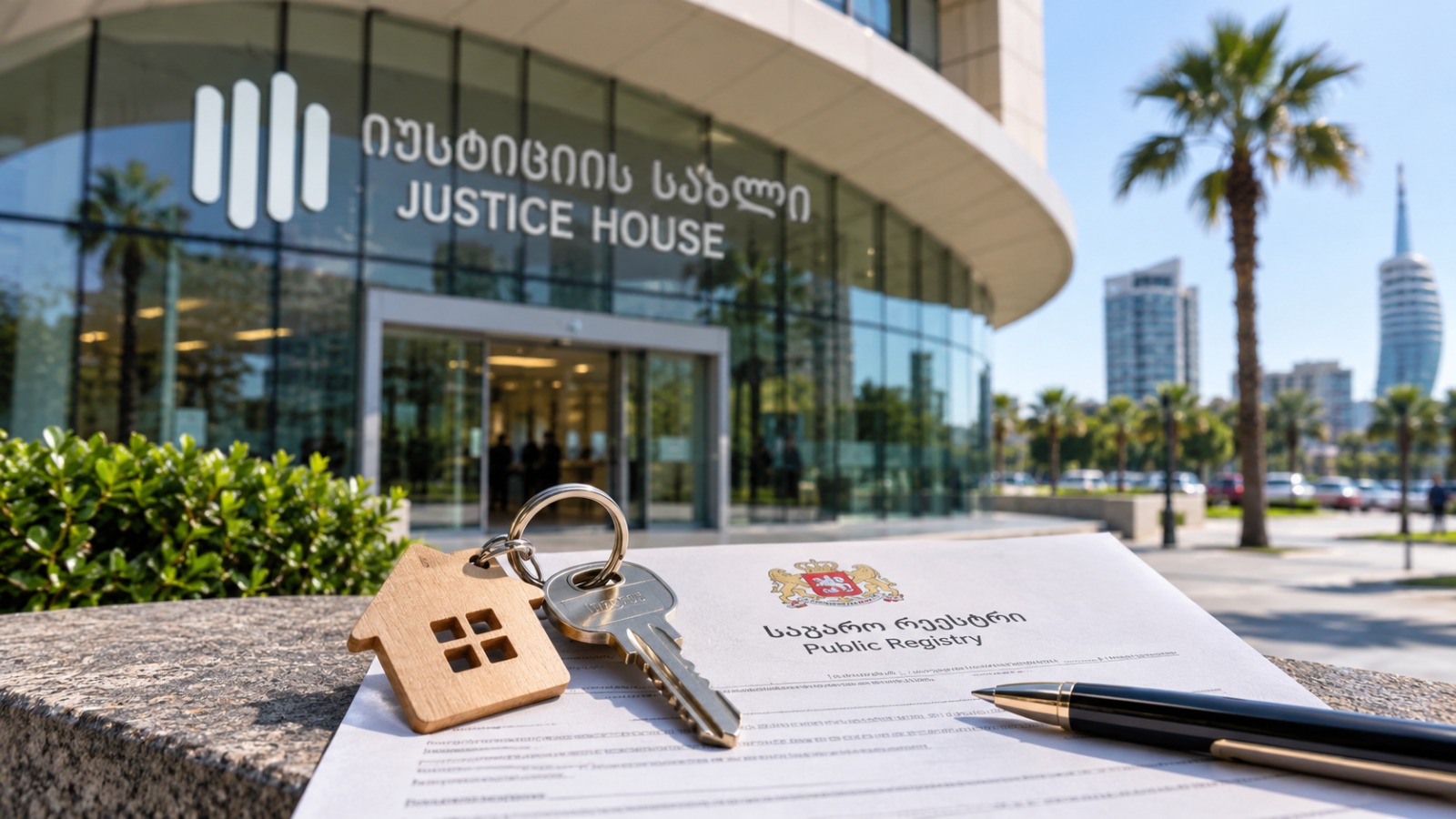
Buying and Selling Property in Georgia Through the Public Service Hall: Documents, Costs and Registration Times
Buying an apartment in Georgia is a relatively straightforward process. In most standard cases, a property transaction can be completed through the Public Service Hall (House of Justice) without mandatory notarization.
Buying and selling real estate in Batumi, Tbilisi, and other Georgian cities typically involves verifying the property, preparing a sale and purchase agreement, signing the documents, and registering the transfer of ownership with the National Agency of Public Registry of Georgia (NAPR).
With properly prepared documents and expedited registration, a transaction can often be completed within the same day. However, the actual processing time depends on the selected registration service, the time of application, and whether any issues arise during registration.
In this guide, we explain how to buy or sell property in Georgia through the Public Service Hall, what documents are required, how much registration costs, and how to avoid common mistakes.
Can You Buy Property in Georgia Without a Notary?
Yes. For a standard apartment sale and purchase transaction in Georgia, notarization of the agreement is not mandatory.
The buyer and seller can visit the Public Service Hall in person, sign the sale and purchase agreement, and submit the documents for state registration of the ownership transfer.
The parties' signatures on the agreement submitted for registration can be certified by an authorized registration officer.
Mandatory notarization of the contract is not required in such standard circumstances.
Moreover, using a notary does not automatically make a property purchase safer. The main risks are related to the seller's ownership rights, the property's legal status, the terms of the agreement, and the payment arrangements.
When might a notary be necessary?
For example, when the buyer or seller is represented by someone acting under a power of attorney issued outside Georgia.
Depending on the country where the power of attorney was issued, notarization, an apostille or consular legalization, and a Georgian translation may be required.
Not every power of attorney follows the same procedure. The requirements should be checked based on the issuing country and the contents of the document.
A notary may also be involved voluntarily or when specific circumstances require additional formalities.
What Documents Are Required to Buy or Sell Property in Georgia?
For a standard transaction between individuals, the following documents are generally required:
- A valid passport or another accepted identification document for the buyer.
- An identification document for the seller.
- The cadastral code of the property.
- A sale and purchase agreement prepared for signing and registration.
- A power of attorney and supporting documents if either party acts through a representative.
If the property has multiple registered owners and the entire property is being sold, all owners must participate in the transaction personally or through duly authorized representatives.
If only a share of the property is being sold, the legal rules governing co-ownership and any applicable requirements must be considered separately.
Is a new public registry extract required?
For a standard transfer of already registered real estate, buyers generally do not need to obtain a new registry extract solely to submit the registration application.
However, checking the latest registration information before purchasing is strongly recommended to confirm ownership details and identify any unexpected restrictions.
Additional documents may be required depending on the circumstances.
Step 1. Verify the Property Before Buying
Before signing the agreement, you should confirm that the property matches its advertised characteristics and that the seller has the legal right to sell it.
The main checks include:
- Ownership. Who is registered as the legal owner?
- Cadastral code. Does it correspond to the exact apartment, house, or land plot being purchased?
- Area. Does the registered area match the agreed property details?
- Mortgage. Is there a registered mortgage in favor of a bank or another creditor?
- Seizures and restrictions. Are there any obstacles to selling or registering the property?
- Legal status. How is the property classified and registered in the public registry?
It is also advisable to inspect the property's actual condition, check for outstanding utility and building maintenance payments, and agree on the conditions for handing over the property.
Outstanding utility bills do not automatically create a legal prohibition on selling a property. However, unresolved payments may cause inconvenience for the new owner.
Property information can be checked through the National Agency of Public Registry of Georgia.
Step 2. Agree on the Sale and Purchase Contract
Once the property has been verified, the parties agree on the transaction terms.
The agreement should clearly specify:
- Buyer and seller details.
- The property's cadastral code and characteristics.
- The full purchase price.
- Payment currency and method.
- Payment deadlines.
- Conditions for handing over the property and keys.
- Responsibilities of both parties.
- Procedures for resolving potential disputes.
It is especially important to agree in advance when the buyer will transfer the money to the seller — before submitting the documents, after filing the application, or after ownership registration is completed.
These options involve different levels of risk.
If payment is made by bank transfer, both parties should consider processing times, potential bank compliance checks, and the conditions for confirming receipt of funds.
For cash payments, it is important to arrange proper documentary confirmation of the transfer.
In certain situations, special secure payment arrangements may be considered if they are available and suitable for the transaction.
Step 3. Sign the Agreement at the Public Service Hall
At the agreed time, the buyer and seller visit the Public Service Hall.
An authorized officer reviews the submitted documents and performs the necessary procedures to accept the registration application.
Both parties sign the sale and purchase agreement. Where required, their signatures are certified according to the applicable procedure.
A standard property transaction does not require notarization of the sale and purchase agreement.
If either party does not speak Georgian, the translation of the documents and the involvement of an interpreter should be arranged in advance in accordance with the registration authority's requirements.
You should never sign an agreement in a language you do not understand without obtaining a complete and accurate explanation of its contents.
Step 4. Pay the Government Registration Fee
After submitting the documents, the parties select the desired registration processing time and pay the corresponding government fee.
Georgia offers several property ownership registration options.
Government registration fees as of November 2026:
| Registration Time | Fee |
|---|---|
| Same day as application | 350 GEL |
| Within 1 business day | 270 GEL |
| Within 4 business days | 150 GEL |
These fees are published by the National Agency of Public Registry of Georgia.
You can check the current rates on the official NAPR website.
According to the published tariff, certification of the parties' signatures on the agreement submitted for registration costs an additional 7 GEL.
Important: Government fees may change. Always confirm the current rates before completing a transaction.
Step 5. How Long Does Property Registration Take in Georgia?
For a standard transaction with properly prepared documents, ownership registration may be completed on the same day the application is submitted.
In practice, expedited registration sometimes takes approximately two hours. However, this is not a legally guaranteed two-hour processing time.
The official service provides for registration on the day of application.
If you need same-day registration, it is important to visit the Public Service Hall well in advance.
Based on practical experience, it is advisable to submit documents before 5:00 PM when requesting expedited registration. However, the availability of this service depends on the operating hours of the specific branch and the applicable application acceptance rules.
Therefore, arriving shortly before closing does not guarantee that registration will be completed that day.
If the transaction is not urgent, you can choose the more affordable one-business-day or four-business-day registration options.
It is important to distinguish between:
- Signing the agreement.
- Submitting the registration application.
- Receiving the registration decision.
- The buyer actually acquiring registered ownership rights.
Submitting the documents does not, by itself, mean that the ownership transfer has already been registered.
Step 6. Obtain Confirmation of Property Ownership
Once registration is complete, the buyer can verify the new ownership information in the public registry and obtain an official extract if necessary.
The state registration of the ownership transfer is the key legal result of the transaction.
After registration, the parties complete any remaining contractual obligations, such as final payment, handing over the keys, signing a handover certificate, or performing other agreed actions.
How Much Does It Cost to Buy or Sell Property in Georgia?
The main government expense in a standard property transaction is the ownership registration fee.
Additional expenses depend on the circumstances.
They may include:
- Signature certification.
- Interpreter services.
- Preparation of a customized sale and purchase agreement.
- Preparation or translation of a power of attorney.
- Legal due diligence.
- Bank transfer fees.
- Real estate agency services, where payable under the agreed terms.
Notarization is not a mandatory expense for a standard property transaction.
If the parties voluntarily choose to use a notary, the cost is calculated according to the applicable notarial tariffs and may depend on factors such as the property's value and the type of notarial service.
Therefore, using a notary for an ordinary transaction is not necessarily the most cost-effective option.
Who pays the registration fee — the buyer or the seller?
This is generally agreed between the parties. It is advisable to determine how transaction expenses will be shared before signing the agreement.
How Does the Process Work for Foreign Buyers?
Foreign citizens can purchase apartments and most types of non-agricultural real estate in Georgia without first obtaining a residence permit.
For a standard apartment purchase, a valid identification document and compliance with registration requirements are generally sufficient.
However, foreign buyers should consider several important factors.
Document language. The sale and purchase agreement and registration documents must comply with Georgian legal and registration requirements.
Interpreter. If the buyer does not speak Georgian, an interpreter may be required.
Bank payments. For large transfers, banks may request documents confirming the source of funds and the purpose of the payment.
Power of attorney. If the buyer cannot attend in person, the possibility of completing the transaction through a representative and the requirements for the relevant documents should be checked in advance.
Land plots. Foreign citizens face restrictions on purchasing agricultural land. Therefore, the rules for buying apartments and land plots should not be treated as identical.
Can a Property Transaction Be Completed Using a Power of Attorney?
Yes. Property purchases and sales in Georgia can be conducted through an authorized representative.
The power of attorney must grant the necessary authority for the relevant actions.
Depending on the transaction, it may need to authorize the representative to:
- Sign the sale and purchase agreement.
- Submit registration applications.
- Represent the buyer or seller at the Public Service Hall and public registry.
- Obtain necessary documents.
- Perform other actions expressly specified in the power of attorney.
If the representative is expected to receive or transfer money, those powers should be verified separately.
Particular attention should be paid to powers of attorney issued abroad.
Depending on the issuing country, an apostille or legalization and a Georgian translation may be required.
Before scheduling the transaction, it is advisable to confirm that the power of attorney will be accepted and that the representative's authority is sufficient.
Common Risks When Buying or Selling Property in Georgia
Although Georgia's property registration process is relatively straightforward, buyers and sellers may encounter various problems.
1. Unverified Encumbrances
A property may have a registered mortgage, seizure, or another restriction.
Before signing the agreement, it is essential to determine whether the sale is permitted and how any encumbrances will be discharged.
2. Errors in Cadastral Information
An incorrect cadastral code or discrepancies in the property's registered area or characteristics may cause registration problems.
3. Insufficient Authority of a Representative
If the transaction is conducted through a representative, the power of attorney must be valid and cover the necessary actions.
4. Poorly Structured Payment Arrangements
One of the most serious mistakes is transferring a large sum without a clear mechanism for confirming payment and registering the ownership transfer.
5. Outstanding Utility Payments
Before taking possession of the property, it is advisable to record utility meter readings and check for outstanding utility and building maintenance charges.
6. Unclear Property Handover Conditions
Both parties should understand when the seller must vacate the property, hand over the keys, and fulfill any remaining obligations.
7. Signing an Agreement Without Understanding Its Terms
If the buyer does not speak Georgian, an accurate and understandable translation of the agreement should be provided before signing.
Why Use a Real Estate Agent for a Property Transaction?
Registering the ownership transfer in Georgia is relatively simple. However, preparing a transaction can require considerably more time and attention.
With professional assistance, a real estate agent typically helps to:
- Verify the main property and ownership details.
- Request and review necessary documents.
- Identify issues requiring additional legal examination.
- Negotiate the purchase price and transaction terms.
- Arrange preparation of the sale and purchase agreement.
- Coordinate payment arrangements.
- Organize the appointment at the Public Service Hall.
- Arrange an interpreter or lawyer if necessary.
- Assist with signing and submitting the documents.
- Monitor registration and property handover.
The exact scope of services may vary between agencies.
A real estate agent can help organize the transaction, but their involvement does not replace professional legal due diligence in complex cases.
Checklist Before Visiting the Public Service Hall
Before signing the agreement, make sure that:
- [ ] The property's cadastral code has been verified.
- [ ] The registered owner has been identified.
- [ ] Registered restrictions and encumbrances have been checked.
- [ ] The purchase price and payment arrangements have been agreed upon.
- [ ] The sale and purchase agreement has been prepared.
- [ ] All participants' identification documents have been checked.
- [ ] Powers of attorney have been verified, where applicable.
- [ ] Translation arrangements have been made if necessary.
- [ ] The registration processing time has been selected.
- [ ] The property and key handover procedure has been agreed upon.
- [ ] Responsibility for registration and additional expenses has been determined.
Frequently Asked Questions
Is a notary required to buy an apartment in Georgia?
No. For a standard apartment sale and purchase transaction, notarization of the agreement is not mandatory. The parties can complete the registration process through the Public Service Hall.
Can property ownership be registered in one day?
Yes. Same-day registration is available under the official NAPR fee schedule. However, completion depends on the application submission time and the circumstances of the transaction.
How much does property registration cost in Georgia?
According to the published NAPR fees, registration costs 150 GEL within four business days, 270 GEL within one business day, or 350 GEL on the day of application. Additional services are charged separately.
Do foreigners need a residence permit to buy an apartment in Georgia?
No. A Georgian residence permit is not required for a standard apartment purchase.
Can I buy property through a power of attorney?
Yes, provided the power of attorney is properly executed and grants the representative the necessary authority.
Do I need a new public registry extract before the transaction?
For standard ownership transfer registration, obtaining a new extract is generally not a separate mandatory step for the buyer. However, checking current registration information before purchasing is strongly recommended.
When does the buyer legally become the property owner?
After the ownership transfer has been registered in Georgia's public registry.
Property Purchase Assistance with BuyHome.ge
Buying real estate in Georgia can be a quick and convenient process when the documents are properly prepared and the transaction terms are agreed upon in advance.
BuyHome.ge helps buyers find apartments in Batumi, Tbilisi, and other regions of Georgia, verify essential property information, arrange the preparation of documents, and receive assistance throughout the sale and purchase process at the Public Service Hall.
We can help negotiate the terms with the seller, organize the transaction, and monitor the property registration process.
Explore New Developments in Georgia
This article is provided for informational purposes only. Government fees and administrative procedures may change. Before completing a transaction, confirm the current requirements with the National Agency of Public Registry of Georgia and seek professional legal advice when necessary.
Date added: 24.03.26
Related articles






Related categories

How to choose an apartment
A practical guide to choosing an apartment in Georgia: key criteria, location assessment, document checks, and common buyer mistakes to avoid.

How to check a developer
A practical guide to checking a real estate developer in Georgia before purchase: documents, permits, risks, and legal safety.

Documents for purchase
A clear overview of documents required to purchase property in Georgia, including buyer and seller requirements, timelines, and key risks.

Transactions for foreigners
A clear overview of property transactions for foreigners in Georgia, including rules, restrictions, required documents, and key specifics.

Property registration
Property registration in Georgia: procedures, required documents, timelines, and key details for buyers and investors.

Apartment prices
Apartment prices in Georgia: market overview, differences by district and property type, and key factors shaping prices.
Benefits of buying property on BuyHome.ge

Best property prices
No commission for buyers
Up-to-Date Properties on the Website
Free property selection
Free transaction support
Free expert consultations

Submit a Request
for a Consultation!

2026 © All rights reserved